AutoCase™
Unified case & eaches handling from a single Grid
One system for every case handling process
AutoCase empowers you to efficiently store, retrieve, and sequence cases and individual items within a single, high-density modular Grid. By combining case and each handling within the same system, AutoCase helps streamline inventory storage, buffering, replenishment, and fulfillment workflows. Our fully automated case induction and extraction processes eliminate manual handling of heavy loads, enhancing safety while reducing labor costs.
Make your ‘case’ for efficiency
AutoCase delivers fast, flexible, and simple case handling for your warehouse. Streamline inbound, storage, picking, and packing — processing 150 to 260 cases per hour — without the complexity of traditional systems. Gain efficient operations, strong order consolidation, and adaptable workflows for any case profile.
End-to-End Control
Technology Consolidation: Reduce vendor complexity, integration time, and operational risk. Fewer systems mean faster deployments and lower total cost of ownership.
Unified Automation: Handle both cases and eaches in a single, high-density system. No more splitting SKUs or relying on separate technologies like shuttles, mini-loads, or racking
Flexibility & Scalability
Broader workflow coverage: Automate storage, retrieval, and sequencing of cases and eaches to keep pace with peak demand and seasonal spikes.
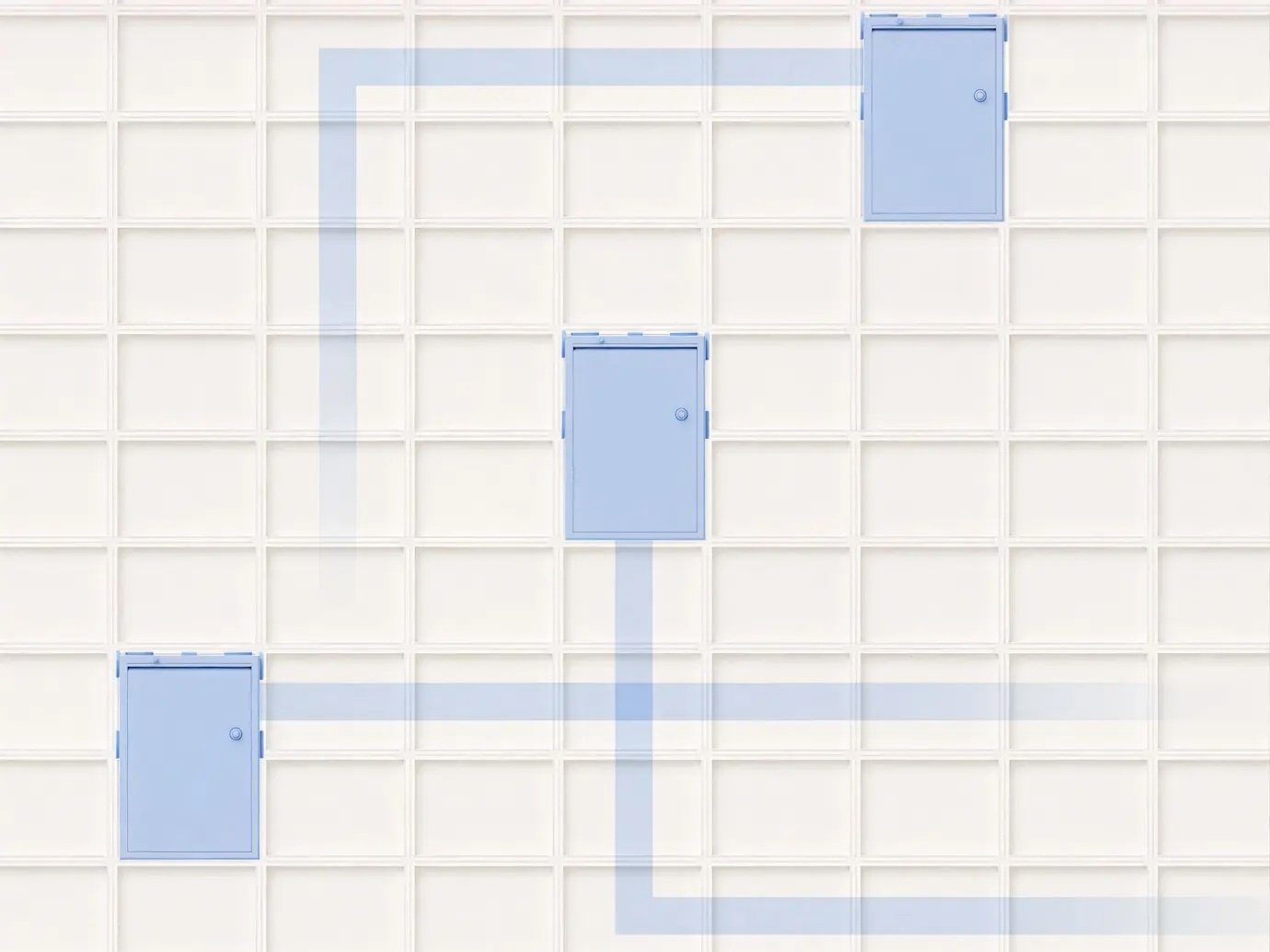
Dynamic Bin Allocation: Intelligent software optimizes storage for both cases and eaches, maximizing your warehouse footprint and delaying costly expansions.
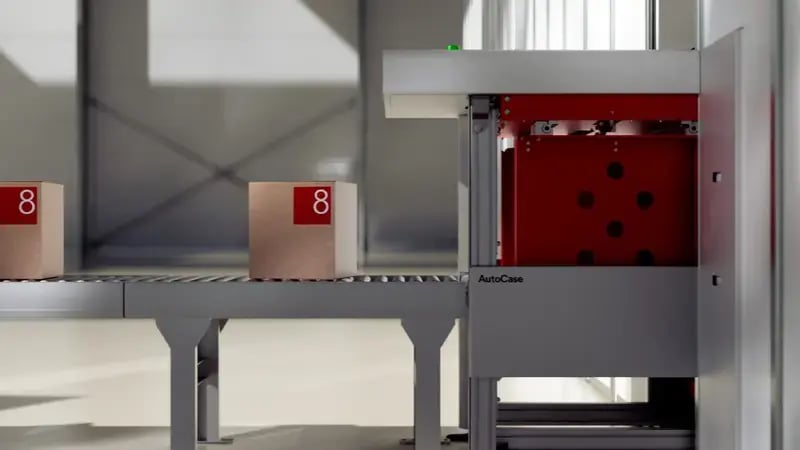
Labor Savings & Safety
Automated Robots: Induct, store, and retrieve cases—no manual lifting required. Lower labor costs, reduce injury risk, and free staff for higher-value tasks
Reduce manual handling: Adapt quickly as your business grows or shifts, with a modular system that scales and evolves alongside your need.
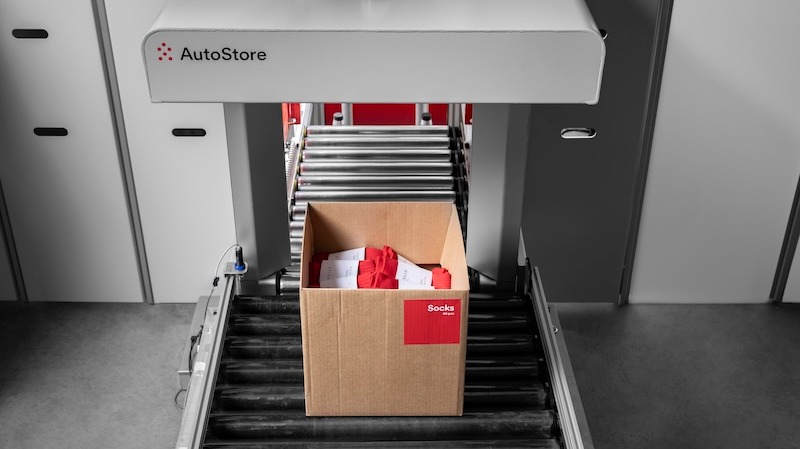
End-to-End Control
→ Technology Consolidation: Reduce vendor complexity, integration time, and operational risk. Fewer systems mean faster deployments and lower total cost of ownership.
→ Unified Automation: Handle both cases and eaches in a single, high-density system. No more splitting SKUs or relying on separate technologies like shuttles, mini-loads, or racking.
Flexibility & Scalability
→ High-Speed Case Handling: Automate storage, retrieval, and sequencing of cases and eaches to keep pace with peak demand and seasonal spikes.
→ Dynamic Bin Allocation: Intelligent software optimizes storage for both cases and eaches, maximizing your warehouse footprint and delaying costly expansions.
Labor Savings & Safety
→ Automated Robots: Induct, store, and retrieve cases—no manual lifting required. Lower labor costs, reduce injury risk, and free staff for higher-value tasks.
→Future-Proof Operations: Adapt quickly as your business grows or shifts, with a modular system that scales and evolves alongside your need.
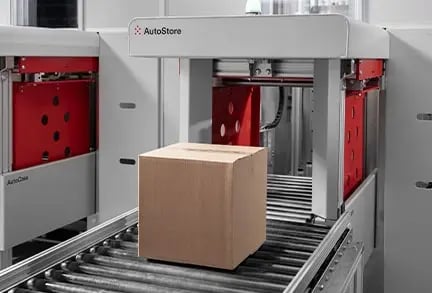
AutoCase in action
Proven in high-volume environment
AutoCase is already operating in real-world fulfillment environments, helping customers bring more case handling workflows inside AutoStore.
At Nowaste Logistics, one of the Nordic region's fastest-growing 3PL providers, the technology is being used in two configurations:
How it works
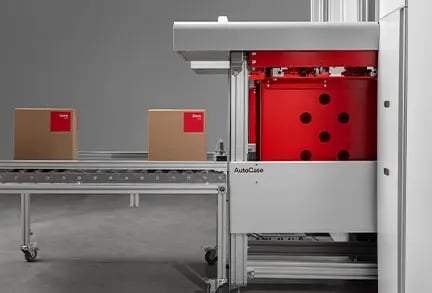
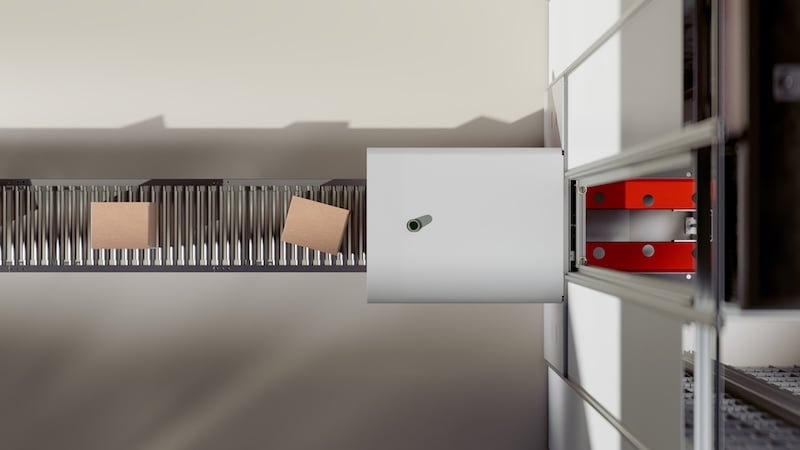
AutoCase uses an advanced clamp-and-push mechanism, enabling cases to be loaded securely, smoothly, and completely hands-free.
Safely pushes a clamped case horizontally into the Bin location.
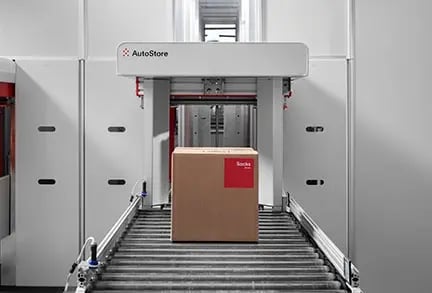
Cases are transported on a roller conveyor to the AutoCase.
Surrounds the case and clamps it in place for secure transportation. Dynamically adapts to ensure safe handling of different case types/sizes.
Transports Bins up and down to enable interaction with the storage Grid.
Pushes the double bottom of the bin up to enable the extraction and insertion of cases.
Pusher Mechanism
Safely pushes a clamped case horizontally into the Bin location.
Rollers
Cases are transported on a roller conveyor to the AutoCase.
Flaps
Surrounds the case and clamps it in place for secure transportation. Dynamically adapts to ensure safe handling of different case types/sizes.
Lift Mechanism
Transports Bins up and down to enable interaction with the storage Grid.
Posts
Pushes the double bottom of the bin up to enable the extraction and insertion of cases.
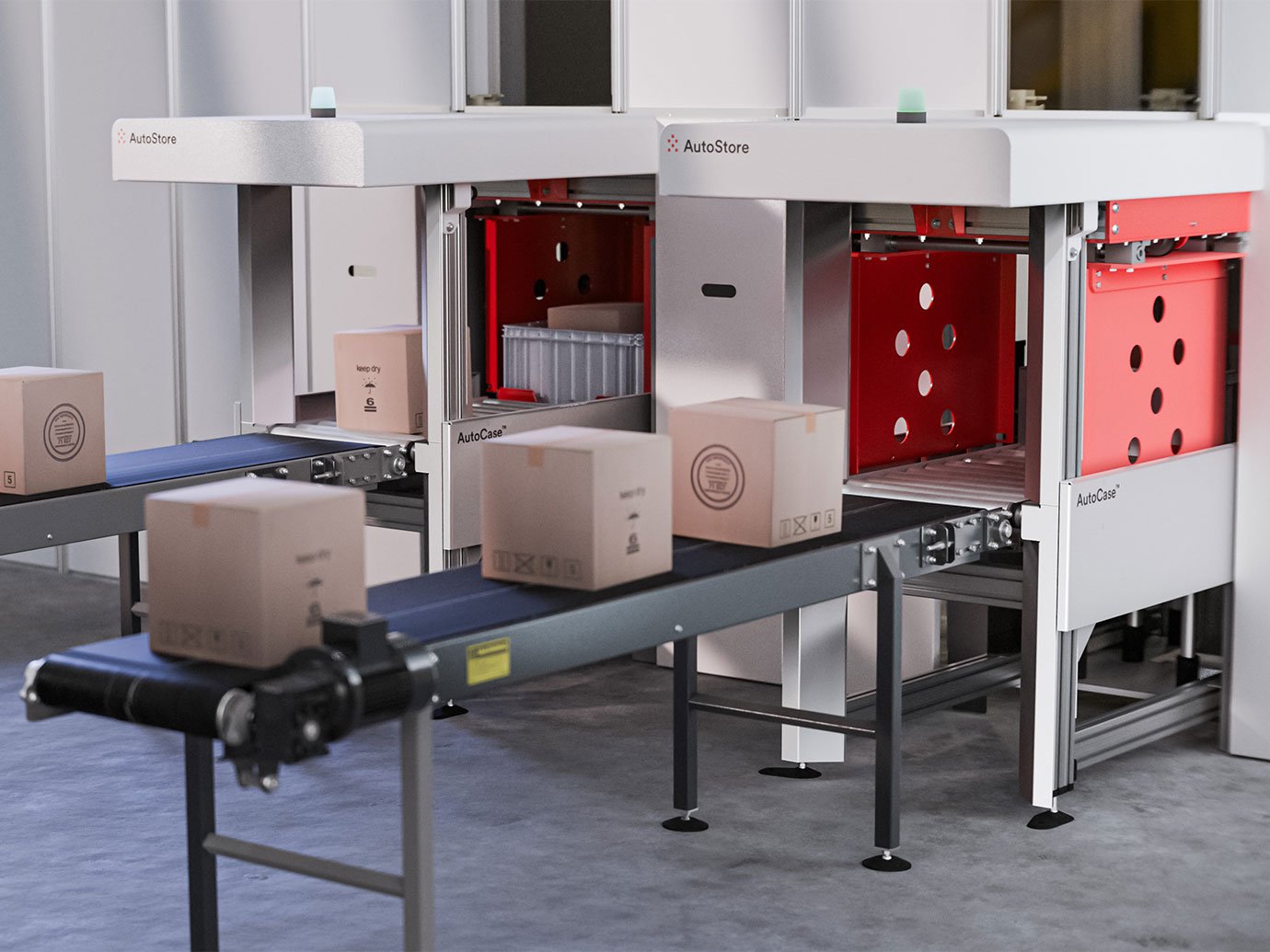
Safely pushes a clamped case horizontally into the Bin location.
Cases are transported on a roller conveyor to the AutoCase.
Surrounds the case and clamps it in place for secure transportation. Dynamically adapts to ensure safe handling of different case types/sizes.
Transports Bins up and down to enable interaction with the storage Grid.
Pushes the double bottom of the bin up to enable the extraction and insertion of cases.
Pusher Mechanism
Safely pushes a clamped case horizontally into the Bin location.
Rollers
Cases are transported on a roller conveyor to the AutoCase.
Flaps
Surrounds the case and clamps it in place for secure transportation. Dynamically adapts to ensure safe handling of different case types/sizes.
Lift Mechanism
Transports Bins up and down to enable interaction with the storage Grid.
Posts
Pushes the double bottom of the bin up to enable the extraction and insertion of cases.
Scalable case handling
Multi-station execution
A single task can be executed simultaneously across multiple AutoCase stations.
By distributing case handling work across several stations, operations can maintain a continuous flow of cases to downstream packaging, palletizing, and outbound processes.
The result is higher throughput, reduced bottlenecks, and more efficient fulfillment during peak demand periods.
Flexible workflows, just in ‘case’
Automates the manual steps of receiving and storing inbound cases, reducing labor strain and speeding up inventory availability — eliminates repetitive tasks and ensures stock is ready for fulfillment faster.
Buffers empty cases for early picking, better shift balancing, and sequencing flexibility. Decouples picking from packing/shipping and improves labor efficiency.
Supports full-case outbound flows for B2B and store replenishment.
Why AutoCase
Built for better case handling
More efficiency, less manual handling, and safer operations in one automated solution.
-
Gentle, secure handling
Case-in-Bin strategy encloses cases to protect fragile and irregularly shaped goods — ideal for sensitive SKUs like cosmetics, electronics, and beverages.
-
Maximum system uptime & reliability
Clamp-and-push design with movable Bin bottom minimizes friction, reduces jams and misalignments, and ensures higher system uptime — even with unstable loads.
-
Superior tracking & error mitigation
Bin-based tracking eliminates barcode-related errors and manual exception handling, supporting a broader SKU assortment.
-
Space-efficient
Supports a broad range of case sizes, helping operations automate more fulfillment workflows without adding separate case-handling systems.
Technical Specification
Bin Height Support
330 mm and 425 mm (case handling type)
Max. Case Payload in the Bin
28 kg
Case/Tote Support
Rectangular, non-transparent rigid cartons, totes, and corrugated cases within supported size and weight limits
-
Maximum: 600 mm × 400 mm x 385 mm
-
Minimum: 160 mm × 160 mm × 50 mm
Operating Temperature
+1° C (33.8° F) to +40° C (104° F)
Throughput
Max. Throughput: 150 – 210 cases/hr
Frequently Asked Questions
-
Is AutoCase only for new Grids, or can it be added to existing ones?
-
Available for new systems
-
Retrofit availability if applicable
-
No additional history/background
-
-
How does AutoCase work?
It is a fully native module within the AutoStore ecosystem, designed to simplify workflows and reduce the need for conveyors.
Its operation follows a simple, end-to-end process:Inbound
Palletized or floor-loaded cases are inducted into AutoCase, which automatically buffers, sequences, and places them into the Grid.Storage
Cases and Bins are stored together within the same Grid, creating a unified system for replenishment and order fulfillment.Outbound
When cases are needed for dispatch, Robots retrieve them and deliver them to AutoCase, where they can be sequenced, consolidated, or sent directly to shipping.Dual cycles
AutoCase supports simultaneous inbound and outbound flows, boosting throughput and maximizing cube utilization.
This connected workflow eliminates unnecessary conveyors, consolidates hybrid operations, and delivers higher storage density with lower system complexity.
-
What are the main use cases for AutoCase?
AutoCase is designed to transform your warehouse workflows, supporting a wide range of inbound, outbound, and hybrid operations:
Inbound case storage
Automatically induct and store inbound cartons directly in the Grid, eliminating the need for manual Bin induction.Outbound replenishment
Retrieve cases efficiently to feed stores, picking stations, or palletizers for faster order fulfillment.Case consolidation and buffering
Automate the consolidation of cases for streamlined, just-in-time order preparation.Mixed workflows
Support hybrid operations where cases flow in and eaches flow out of the same Grid, enabling flexible, high-efficiency fulfillment.AutoCase’s versatility makes it ideal for hybrid fulfillment centers managing both e-commerce and store replenishment within one unified system.
-
What are AutoCase’s strengths vs. shuttles and miniloads?
- Unified case and each system: Supports both flows in one Grid, eliminating the need for separate case handling systems.
- Lower project costs and faster implementation: Shared task group handling across AutoCases (FlowStream) reduces the need for complex, project-specific integrations, lowering implementation effort and helping shorten deployment timelines.
- Faster ROI: Lower CapEx and shorter payback compared to large shuttle systems.
- High density, lower complexity: Avoids conveyors, telescoping shuttles, and stacker cranes, reducing mechanical complexity and maintenance.
- Cold chain capable: Native operation from 1°C (33.8° F) to 40°C (104° F) without special adaptations.
- Flexible and retrofit friendly: Ideal for both greenfield and retrofit projects due to its modular design.
Our innovation is at your service
Consumer behavior has changed; supply chains have not. Let's talk today to figure out the Bin types and quantities you need to maintain speed and efficiency for your customers.