/2025-02%20AutoStore%20Logo%20Landscape%20(red%20white).png?width=175&height=31&name=2025-02%20AutoStore%20Logo%20Landscape%20(red%20white).png "2025-02 AutoStore Logo Landscape (red white)")
/2025-02%20AutoStore%20Logo%20Landscape%20(red%20black).png?width=175&height=31&name=2025-02%20AutoStore%20Logo%20Landscape%20(red%20black).png "2025-02 AutoStore Logo Landscape (red black)")
DKK-TOA Corporation Modernizes Warehouse Operations With AutoStore
DKK-TOA Corporation improves warehouse operations with AutoStore: 40% less storage space and 25% reduction in picking time.
3 min read
/Partner%20Logos/Okamura_Logo_H_RGB_1.jpg?width=2037&name=Okamura_Logo_H_RGB_1.jpg)
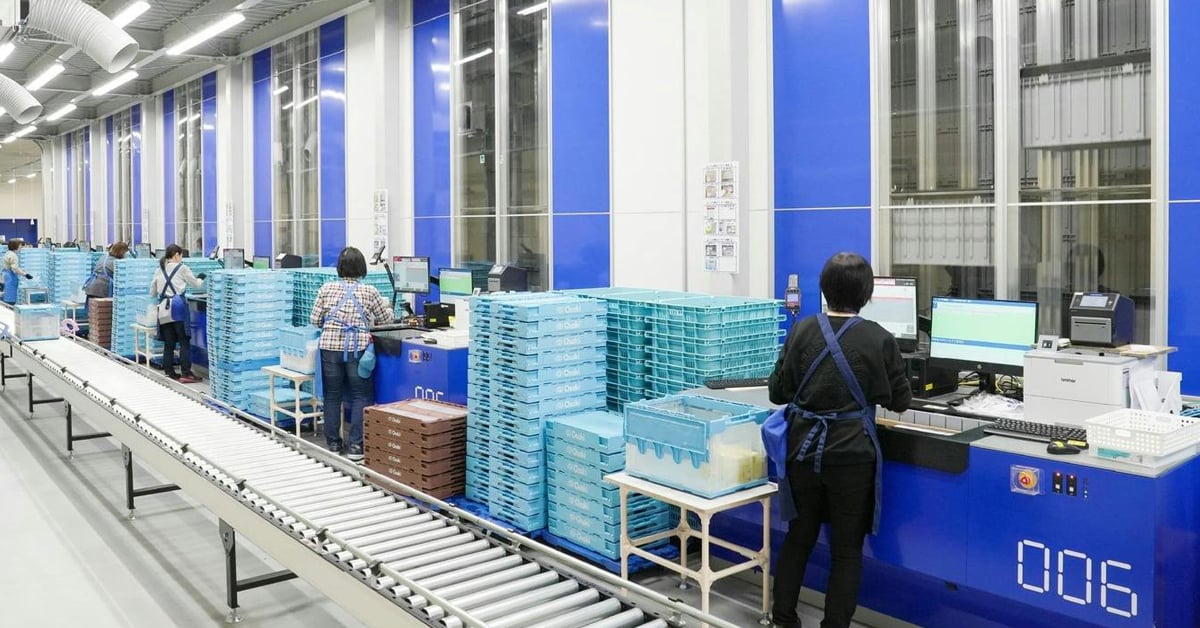
AutoStore supports high-density medical inventory management and faster fulfillment operations at Osaki Medical’s Central Japan Logistics Center.
Osaki Medical Co., Ltd. is a Japanese manufacturer and supplier of medical and nursing care products. Founded in 1936, the company supplies sanitary materials, maternity products, and nursing care products used by medical institutions across Japan.
At its Central Japan Logistics Center, Osaki Medical needed to strengthen product traceability while maintaining stable and sustainable supply operations. The company manages a large volume of loose-item inventory, including products requiring expiration-date management at both case and individual item level. At the same time, the operation faced increasing pressure related to storage efficiency, labor shortages, and operational productivity.
Osaki Medical supplies products to medical institutions across Japan, with hospitals and healthcare providers placing replenishment orders after products have been consumed during patient care. This creates a continuous flow of frequent, small-volume orders that require fast and accurate fulfillment across a very large product range.
To support these requirements, Osaki Medical implemented the AutoStore automated storage and retrieval system, empowered by Okamura.
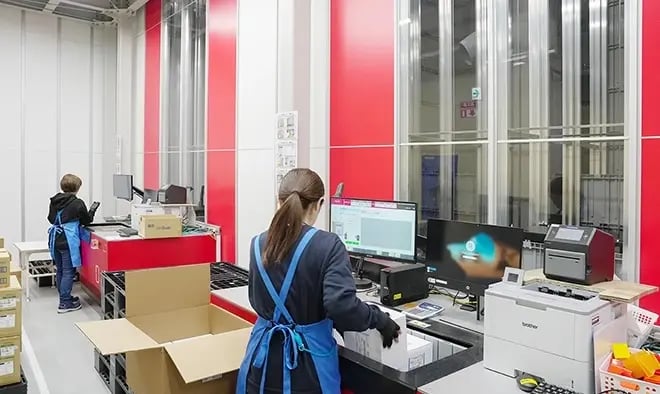
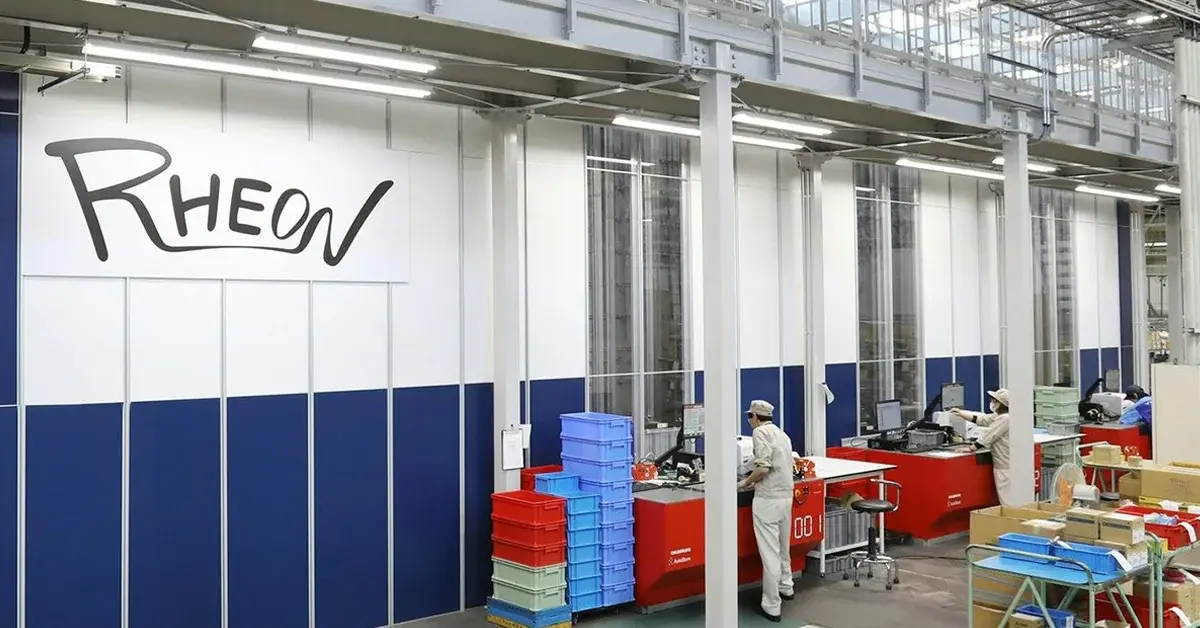
Workers packing orders in the Osaki Medical Central Japan warehouse
Osaki Medical’s logistics operation was managing growing complexity across inventory control, traceability, and warehouse productivity. Traceability requirements for medical products had become increasingly strict, including expiration-date management for loose-item inventory using GS1-128 barcodes.
The operation also relied heavily on manual warehouse movement during picking activities, creating additional workload for operators and limiting productivity. At the same time, the company needed to support a very large percentage of loose-item inventory while maintaining stable supply capabilities and preparing for future business expansion.
Core operational challenges included:
Labor shortages impacting warehouse operations.
Expiration-date management for loose-item medical products.
Limited storage efficiency with conventional storage methods.
Manual walking-based picking processes.
Increasing need for operational stability and supply continuity.
Managing more than 98% of loose-item inventory efficiently.
Osaki Medical implemented AutoStore at its Central Japan Logistics Center to improve storage density, automate picking operations, and strengthen inventory traceability management. The system enables goods-to-person workflows, reducing manual operator travel while improving operational consistency.
The AutoStore solution stores loose-item inventory inside a high-density Grid structure where Robots retrieve Bins and deliver them directly to workstations. The system also supports expiration-date management for loose items through Bin-level inventory management inside AutoStore.
The AutoStore installation consists of 34 R5 Robots operating across a Grid containing 24,158 Bins. The system includes 9 CarouselPorts supporting picking and inventory handling operations.
The Grid measures approximately 19 meters by 41 meters and is configured with 14 levels. The system supports a planned inbound operational capacity of 1,170 bins per hour.
More than 98% of the center’s loose-item inventory is stored inside AutoStore. Robots retrieve Bins automatically and deliver them to operators at CarouselPorts, replacing traditional warehouse walking with goods-to-person workflows.
To support Osaki Medical’s replenishment workflows efficiently, AutoStore provides rapid access to inventory through automated goods-to-person operations, improving storage density, reducing operator travel, and creating a more stable and efficient warehouse flow.
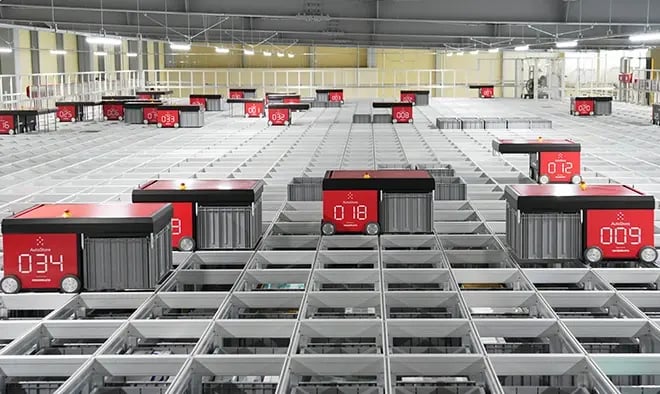
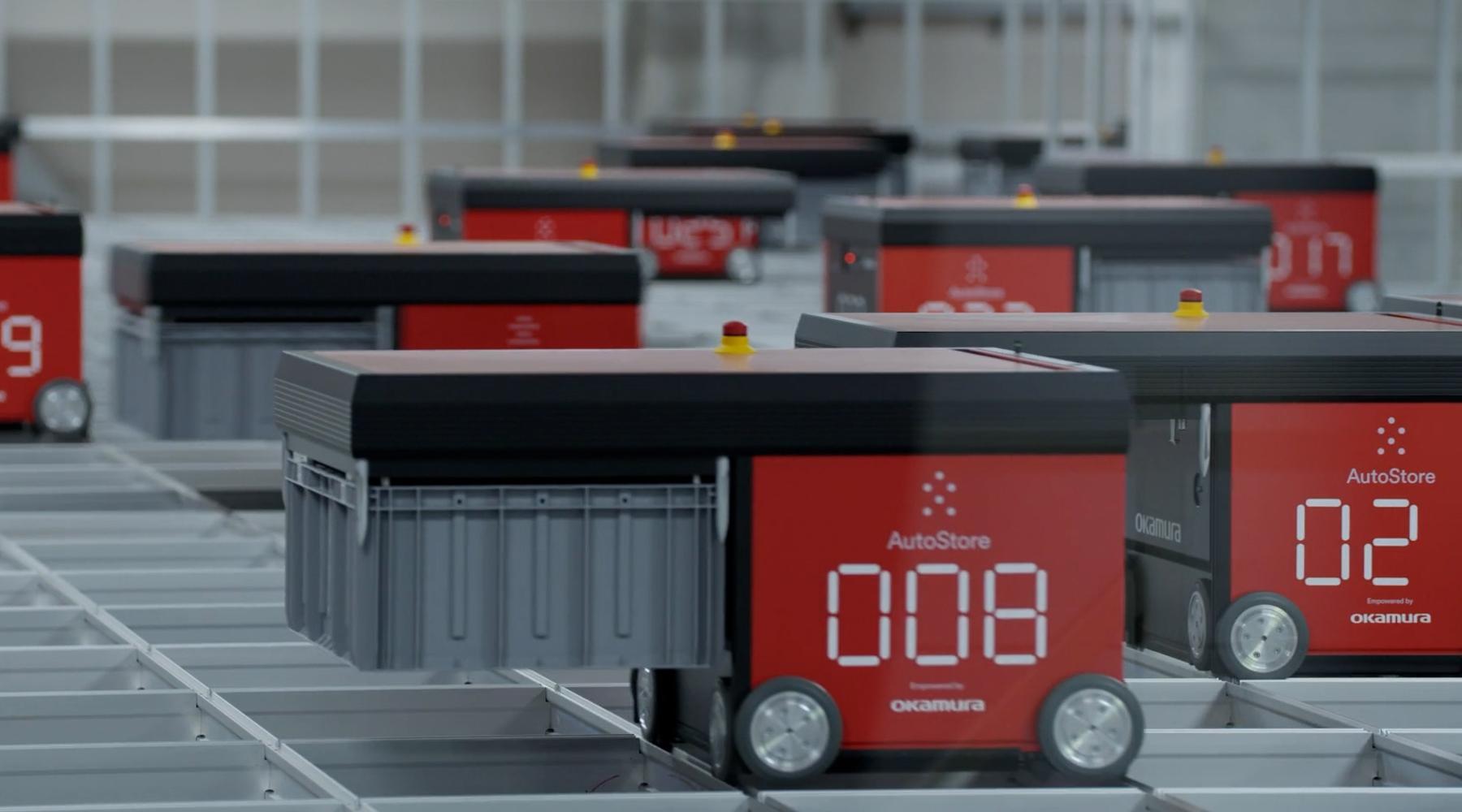
Robots moving across the AutoStore Grid at the Osaki Medical warehouse in Japan
The AutoStore implementation delivered measurable improvements in storage efficiency, operational productivity, and warehouse workflow stability at Osaki Medical’s Central Japan Logistics Center.
Key operational outcomes included:
6x storage efficiency improvement compared with medium-volume pallet storage.
4x productivity improvement compared with previous manual picking operations.
98%+ of loose-item inventory managed inside AutoStore.
Reduced operator walking through goods-to-person automation.
Improved operational stability during picking activities.
Enhanced expiration-date management for loose-item inventory
AutoStore significantly reduced the burden on warehouse operators by replacing walking-intensive picking workflows with Robot-driven automation. The company also noted that the system contributed to more stable operations and improved work quality.
The implementation exceeded the company’s original expectations. Osaki Medical also referenced transportation route stabilization initiatives initiated in 2024, contributing to stable supply operations together with warehouse automation improvements.
Looking ahead, the company intends to use the Central Japan Logistics Center as a foundation for broader operational expansion, including future productivity improvements across additional logistics centers as well as planned business expansion within ASEAN markets.
By implementing AutoStore at its Central Japan Logistics Center, Osaki Medical improved storage density, automated labor-intensive warehouse workflows, and strengthened traceability management for medical inventory operations. The system delivered measurable gains in both storage efficiency and productivity while supporting stable supply operations and future scalability.
The project demonstrates how AutoStore can support high-density medical inventory environments requiring reliable loose-item handling, operational consistency, and scalable fulfillment performance.
Robots: 34 R5 Robots
Ports: 9 CarouselPorts
Bins: 24,158 Bins
Grid: Approximately 19m × 41m, 14 levels high
Partner: Okamura
16-9.jpg)
DKK-TOA Corporation improves warehouse operations with AutoStore: 40% less storage space and 25% reduction in picking time.
Japanese producer of fishing rigs, Hayabusa, houses the most extensive AutoStore™ system in Japan. The automation system has helped to solve storage...
67% smaller storage footprint and 40% improved workforce efficiency for production and service parts logistics.
Automation improves TORANOANA, Inc.’s capacity, efficiency, speed, and worker comfort