TABLE OF CONTENTS
Automation
6
MIN READ
Last updated:
March 26, 2026
February 2, 2026
AI Translated | Original AutoStore Content

Brownfield Warehouse Automation: Why AutoStore Retrofits Work Where Others Struggle

How AutoStore enables phased automation in live, space-constrained warehouse environments.

Thank you! Your submission has been received!
Oops! Something went wrong while submitting the form.
TABLE OF CONTENTS

For many logistics and supply chain leaders, the biggest barrier to warehouse automation is not ambition. It is reality.

Warehouses are already operating at or near capacity. Daily operations cannot be interrupted without directly impacting service levels. Buildings are often decades old, shaped by years of incremental change rather than long-term automation planning. At the same time, capital investments are expected to deliver clear returns quickly and with limited risk.

This is the context in which most brownfield warehouse automation decisions are made.

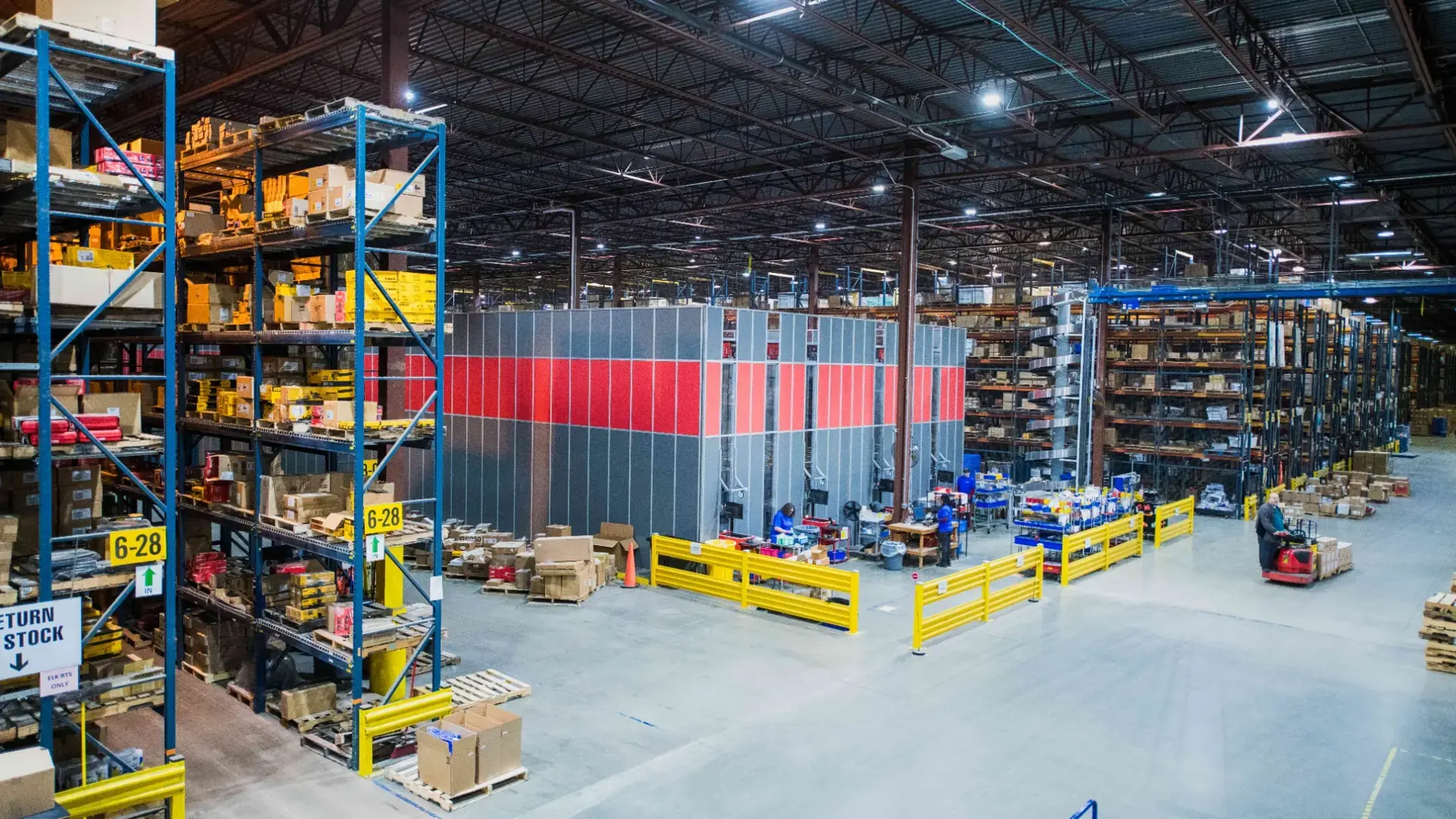
Globally, a significant share of AutoStore installations are deployed in brownfield environments. That reflects a practical truth. Most automation projects are not greenfield builds. They are retrofits into live operations that must continue running while modernization takes place.

This article explains what brownfield retrofits involve, the challenges they introduce, and why AutoStore is particularly well suited for automation in existing warehouse environments.

What Is a Brownfield Warehouse Retrofit?

A brownfield warehouse retrofit involves implementing new automation technology inside an existing, operational facility.

Unlike greenfield projects, where automation is designed into a new building from the start, brownfield projects must adapt to fixed constraints. These typically include existing infrastructure, active workflows, limited space, and strict uptime requirements.

Successful brownfield automation depends on solutions that can be deployed in phases, fit within existing buildings, and improve performance without forcing a full shutdown of operations.

The Core Challenges of Brownfield Automation

Brownfield automation projects are defined as much by what companies must avoid as by what they want to achieve. Across industries, several challenges consistently shape retrofit decisions.

Legacy infrastructure

Many existing warehouses were not designed with automation in mind. They often include irregular column spacing, varying ceiling heights, and legacy material handling equipment. Any automation solution must integrate into these physical realities rather than require extensive building modification.

At Benetton, AutoStore was selected specifically for its ability to integrate seamlessly into an existing distribution facility. According to the project description, this eliminated the need for extensive building modifications or relocation, allowing Benetton to modernize operations within the constraints of the current site.

Uptime constraints

Warehouses supporting e-commerce, wholesale distribution, or manufacturing supply chains cannot afford extended downtime. Even short disruptions can result in missed delivery commitments and service-level issues.

At Cutter & Buck’s fulfillment center in Washington State, AutoStore was retrofitted into a 24-year-old building without any downtime to ongoing operations during deployment. The system was installed while order fulfillment continued, demonstrating how automation can be introduced without stopping the business.

Space limitations

In many brownfield facilities, available floor space is already fully utilized. Expanding the building footprint is often expensive or not possible, which makes storage density a critical lever for growth.

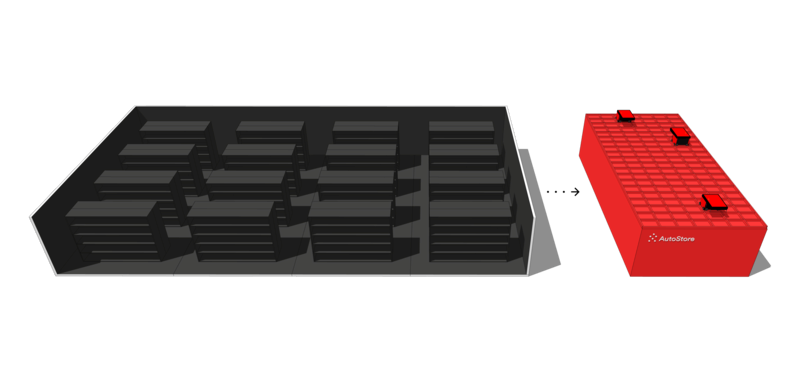
Zeek Logistics illustrates this challenge clearly. By replacing traditional racking with an AutoStore Grid occupying approximately 30 to 40 percent of the previous storage area, the company increased both capacity and throughput within an existing facility.

Phased investment and ROI pressure

Automation investments are expected to deliver measurable returns, often under uncertain demand conditions. Large, single-phase projects can introduce unnecessary risk.

Bleckmann, a global third-party logistics provider, began with a basic AutoStore setup and expanded the system incrementally over time. This phased approach contributed to a 60 percent reduction in order cycle time while allowing the operation to scale in line with customer demand.

How AutoStore Addresses Brownfield Constraints

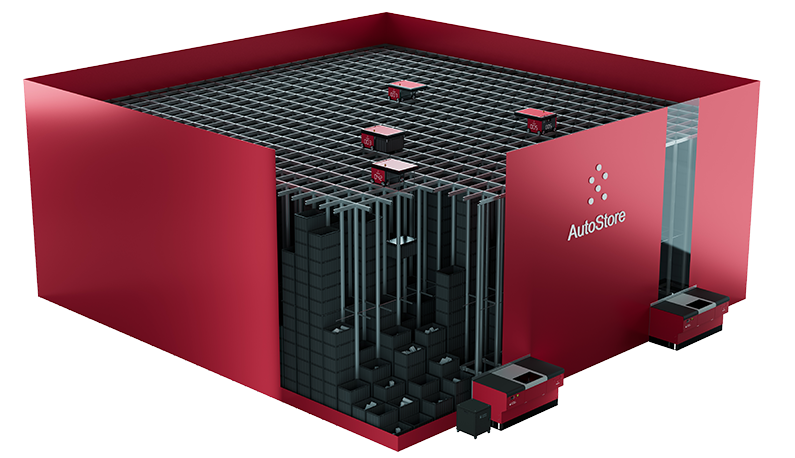
AutoStore’s cube-based storage and retrieval architecture aligns closely with the realities of brownfield environments. Its design supports incremental deployment, high storage density, and installation alongside live operations.

Using density to create space

AutoStore provides significantly higher storage density than conventional shelving or racking. In brownfield environments, this density becomes a deployment mechanism rather than just a performance metric.

A common approach is often described as a sacrificial aisle strategy. Instead of clearing large areas upfront, organizations remove a small number of low-velocity manual storage aisles to create space for the first phase of the AutoStore Grid.

Once operational, that initial Grid can absorb inventory from additional manual storage areas. As those areas are cleared, the Grid can expand in stages. Over time, the system effectively creates the space required for its own growth.

Implementing automation without stopping operations

Because AutoStore systems are modular, installation can be staged while warehouse operations continue. This reduces project risk and allows expansion to be aligned with business growth rather than fixed assumptions.

Balluff provides an example of this approach. AutoStore was implemented with zero facility renovations and deployed in phases, allowing throughput improvements to be realized without disrupting day-to-day operations.

Translating Technical Capabilities into Business Value

For automation decision-makers, technical features matter only when they translate into business outcomes.

Higher storage density allows more inventory to be handled within the same footprint, improving revenue per square meter. Phased deployment reduces upfront capital exposure and allows investment to follow actual growth rather than forecasts.

Maintaining operational continuity protects service levels during implementation and reduces the organizational risk typically associated with large automation projects.

Why AutoStore Fits Brownfield Environments

Successful brownfield warehouse automation depends on flexibility, predictability, and risk control.

AutoStore’s cube-based architecture, modular expansion model, and ability to integrate into existing buildings make it particularly well suited for retrofit projects. Rather than forcing warehouses to adapt to automation, AutoStore adapts to the warehouse, including its physical constraints, operating rhythm, and business priorities.

Conclusion

For most warehouses, automation has to work within existing buildings rather than starting from scratch.

As supply chains demand higher throughput, faster fulfillment, and better space utilization, existing facilities must evolve. AutoStore provides a practical path to automation for warehouses that cannot stop operations, cannot easily expand their footprint, and need results without unnecessary risk.

Want to learn more about this topic?

Talk to your local expert.
Let's talk
Let's talk
THE AUTHOR(S)

TAGS
Category
Category
Category
Category

Get your complimentary copy

No items found.