/2025-02%20AutoStore%20Logo%20Landscape%20(red%20white).png?width=175&height=31&name=2025-02%20AutoStore%20Logo%20Landscape%20(red%20white).png "2025-02 AutoStore Logo Landscape (red white)")
/2025-02%20AutoStore%20Logo%20Landscape%20(red%20black).png?width=175&height=31&name=2025-02%20AutoStore%20Logo%20Landscape%20(red%20black).png "2025-02 AutoStore Logo Landscape (red black)")



Preparing for Automation: The Data You Need to Collect and Why It’s So Important
Caveat emptor is the principle that a buyer should be cautious to the possibility of being cheated. You can avoid risks involved with automating your...
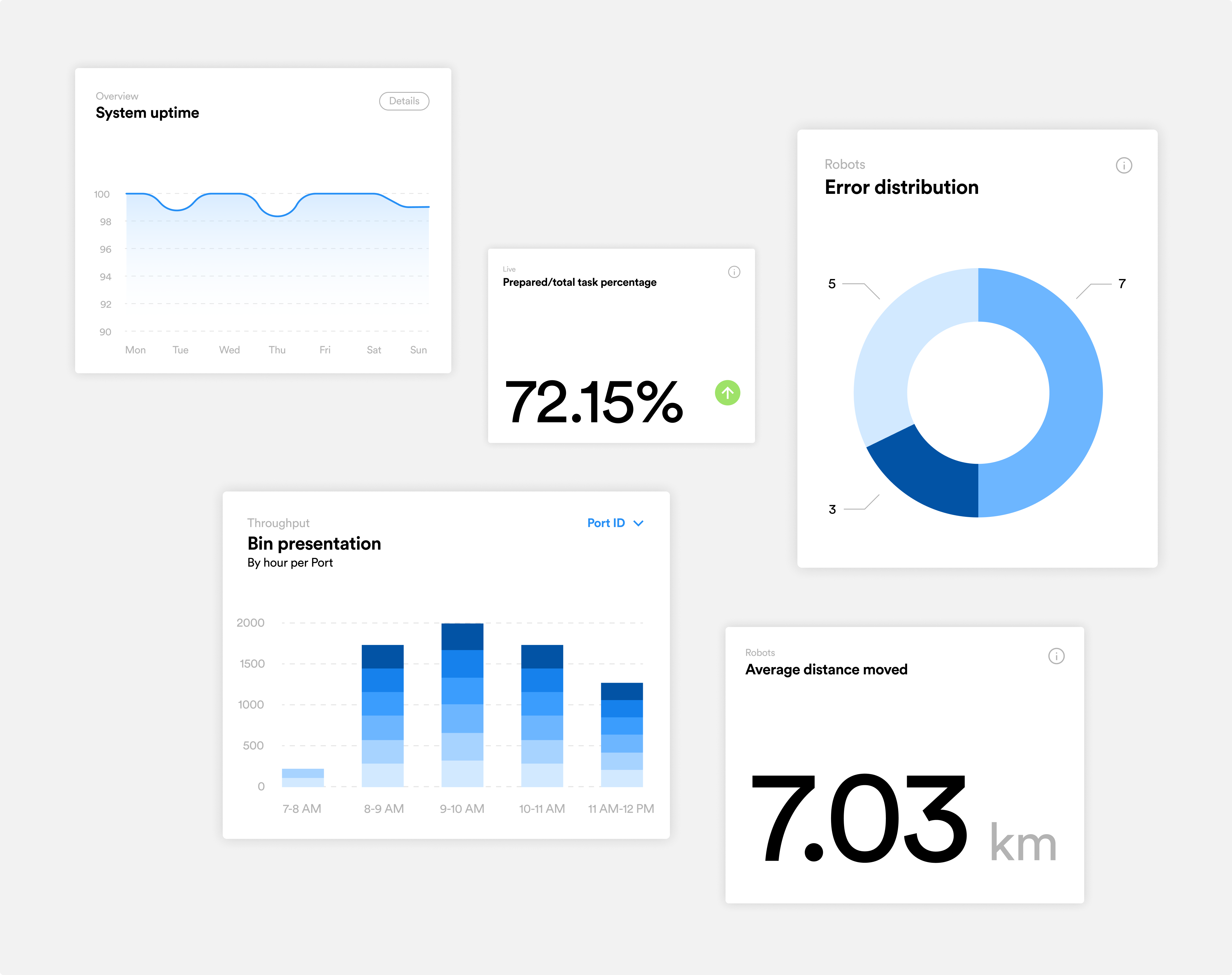
In today’s fast-paced logistics environments, transforming raw system data into operational clarity is crucial for efficient decision-making. Explore how CubeAnalytics™ leverages AI to streamline diagnostics, turning complex data into actionable insights for warehouse teams.
AutoStore systems generate vast amounts of operational data every day. Robots move continuously, Ports operate in parallel, Bins circulate, and thousands of system signals are logged beneath the surface. For most operators, finding all that data is easy. The challenge is knowing what data actually matters, when something requires attention, and what to do next.
CubeAnalytics™ (formerly known as Unify Analytics) was designed to close this gap. Rather than presenting more dashboards or raw metrics, the platform focuses on translating system behavior into insights that support day-to-day operational decisions.
At its core, CubeAnalytics applies AutoStore Intelligence™ to continuously analyze operational data and surface patterns that indicate emerging issues, performance risks, or opportunities to stabilize throughput before problems escalate.
AutoStore Intelligence is the AI layer that turns continuous system data into meaningful insights, helping operators quickly understand what’s happening, why it matters, and where to act.
Before CubeAnalytics with AI, understanding AutoStore system health typically required a manual, expert-led process. Logs had to be extracted, structured, analyzed across multiple components, and interpreted by specialists who knew where to look. Even when the data was available, connecting Robot behavior, Port performance, Bin flow, and throughput trends into a coherent explanation often took hours.
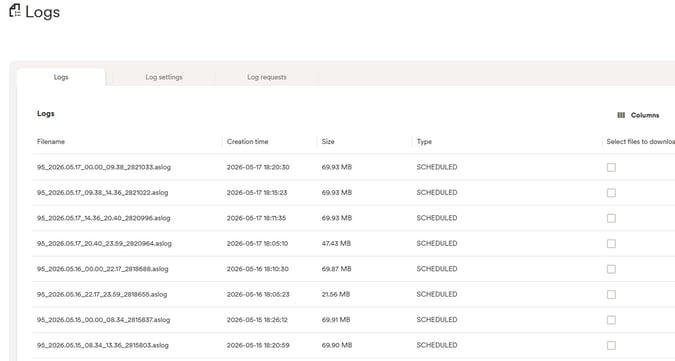
AutoStore log files provide valuable visibility into system health, but their one-dimensional format still requires trained users to interpret the data and determine the right response.
That time was largely spent on interpretation rather than action. Users were figuring out which signals were relevant, ruling out normal variation, and translating findings into a recommended response. The result was slower troubleshooting, delayed decisions, and a heavier reliance on limited expert resources. CubeAnalytics was built to remove this interpretation burden while keeping operators firmly in control of decisions.
CubeAnalytics automates both data collection and analysis. The platform connects securely to operational data and continuously evaluates system behavior, refreshing AI-generated summaries daily based on recent performance. Instead of presenting fragmented metrics, it provides a completed analysis that highlights what is happening, why it matters, and what type of action may be required.
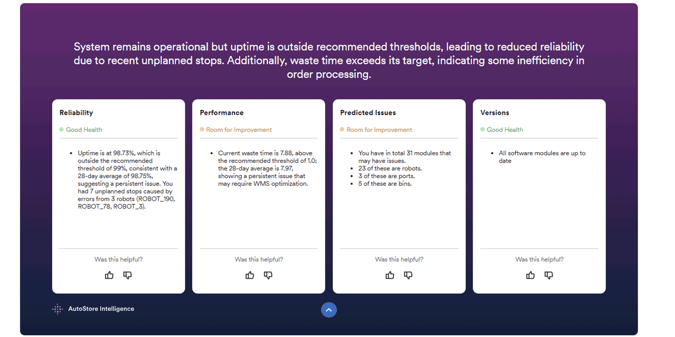
CubeAnalytics uses artificial intelligence to interpret log data and present it in a more accessible way. The Grid Summary feature highlights four core categories (Reliability, Performance, Predicted Issues, and Software Versions) to give users a fast, high-level view of system health.
The AI behind CubeAnalytics uses more than 20 proprietary models trained on large volumes of operational and simulation data from AutoStore systems worldwide. These models are designed to distinguish meaningful anomalies from normal fluctuations, surfacing only insights that indicate something worth acting on. The goal is not maximum alerting, but relevant signal.
An important distinction in CubeAnalytics is how insights are framed. Rather than positioning AI as an automated decision-maker, the platform acts as decision support. It highlights patterns, explains potential root causes, and recommends next steps in clear language, allowing operations, maintenance, and engineering teams to apply their expertise where it matters most.
For example, instead of flagging isolated sensor data, CubeAnalytics correlates behavior across Robots, Ports, Bin movements, and component-level signals such as battery charging times. This broader context helps teams understand whether an issue is localized, systemic, or part of a developing trend, reducing guesswork and unnecessary investigation.
One of the most practical outcomes of this approach is time savings for experienced engineers and operators. By delivering a completed analysis rather than raw data, CubeAnalytics removes hours of manual interpretation work per issue. Experts receive the insight directly instead of having to derive it themselves.
The software allows skilled resources to spend less time parsing logs and more time on optimization, planning, and long-term improvement. Over time, this helps organizations scale their operations without scaling complexity at the same rate.
Adoption of AI tools in operations depends heavily on trust. CubeAnalytics addresses this by prioritizing explainability and consistency over opaque automation. Insights are grounded in observed system behavior, refreshed regularly, and framed in operational terms teams already recognize.
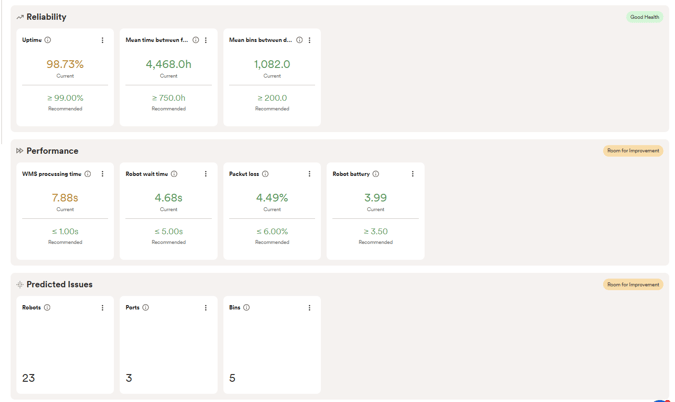
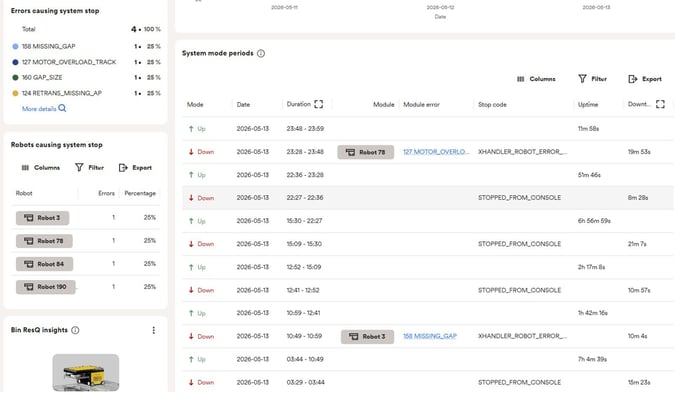
Users can click any Grid Summary subcategory to explore issues in greater detail. For example, selecting the Uptime card (above) reveals the error types and downtime duration associated with four Robots (below).
For many users, trust builds first when the platform confirms what they already suspected, then grows as CubeAnalytics begins to surface issues earlier than human analysis would catch. Accuracy over time, combined with clear explanations, helps teams develop confidence in using AI insights as part of their daily workflow rather than viewing them as black-box recommendations.
CubeAnalytics also brings structure and consistency to how performance is discussed across teams and sites. With standardized summaries, dashboards, and reports, organizations gain a shared view of system health that reduces dependency on individual expertise or local interpretation.
For multi-site operators, this becomes especially important. Instead of reacting everywhere at once, teams can prioritize attention based on where AI indicates the highest operational risk or opportunity. Overall, this supports more predictable performance management across installations.
Customers retain full ownership of their data in CubeAnalytics and control whether partners can access site‑level insights. Data is encrypted in transit and at rest, logically isolated per customer, and built on ISO 27001‑ and SOC 2‑compliant cloud infrastructure.
While the AI benefits from learning patterns across the global AutoStore community, such as general component behavior over time, it does not learn from individual customers’ inventory or order data. This approach allows customers to benefit from community‑level intelligence without exposing their own operational details.
Trust also comes from transparency. Insights are communicated in plain language and include the reasoning behind recommendations, allowing teams to evaluate them rather than blindly follow them. In practice, trust often builds fastest when the AI validates something a technician already suspected but couldn’t easily prove.
CubeAnalytics helps operations teams see clearly, act faster, and maintain stable, predictable system performance. By embedding AutoStore Intelligence directly into day-to-day analytics, the platform shifts diagnostic work from manual analysis to continuous, AI-supported insight without removing human judgment from the loop.
The result is a more resilient operation: fewer surprises, faster responses, and better use of expert time as AutoStore systems continue to scale in size and complexity.
-1.jpg)
Caveat emptor is the principle that a buyer should be cautious to the possibility of being cheated. You can avoid risks involved with automating your...

What is lead time? This article explains what lead time is, how it differs from delivery time, and the benefits of shortening it. Read more here.

What is a transportation management system and how does it work? Find out with AutoStore, exploring 7 benefits of TMS and how it optimizes the supply...
Discover what 3PL healthcare logistics is, why it’s essential for modern healthcare supply chains, and how automation is redefining efficiency,...