/2025-02%20AutoStore%20Logo%20Landscape%20(red%20white).png?width=175&height=31&name=2025-02%20AutoStore%20Logo%20Landscape%20(red%20white).png "2025-02 AutoStore Logo Landscape (red white)")
/2025-02%20AutoStore%20Logo%20Landscape%20(red%20black).png?width=175&height=31&name=2025-02%20AutoStore%20Logo%20Landscape%20(red%20black).png "2025-02 AutoStore Logo Landscape (red black)")
.svg)


Streamline Operations With an Automated Warehouse
Learn about different types, benefits, and what to be aware of when implementing an automated warehouse.
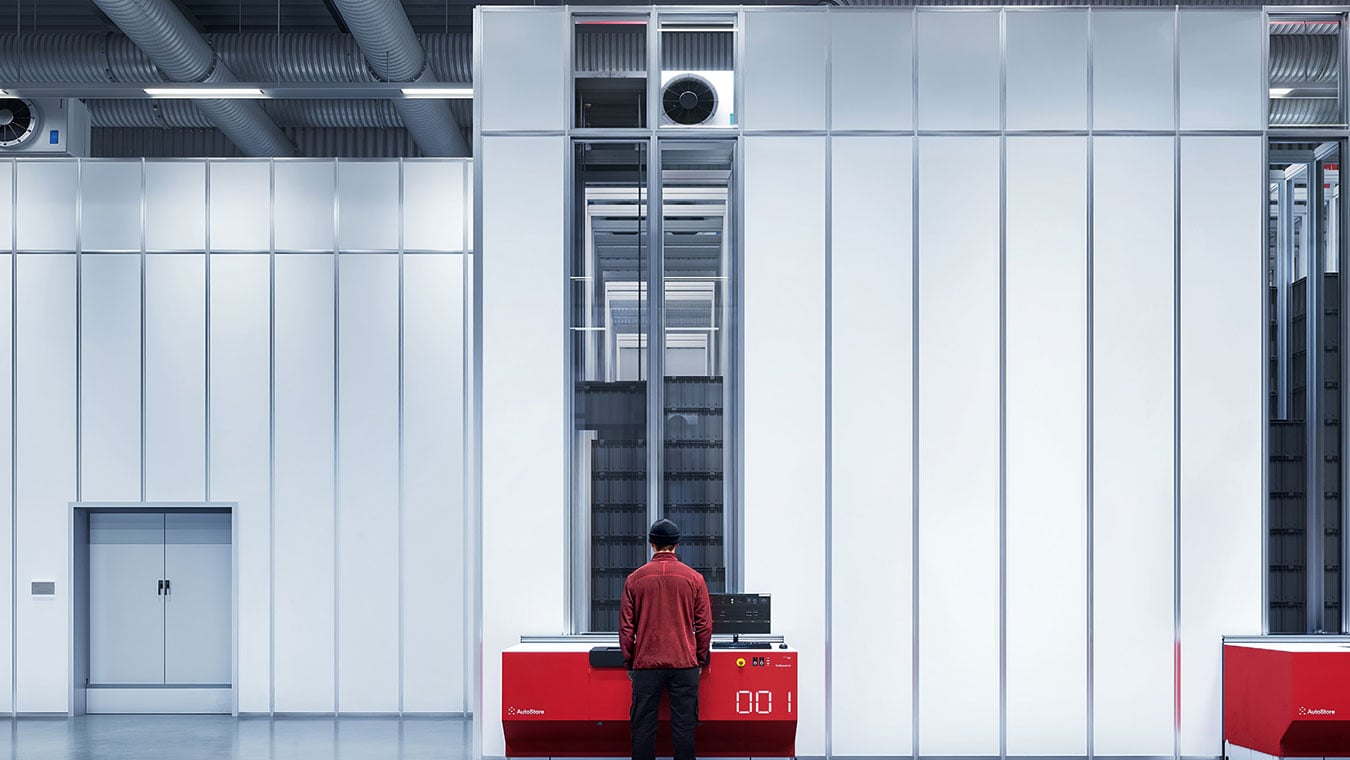
AI is already changing how warehouses operate, but adoption is not the same as trust. In a new AutoStore whitepaper based on a global survey of 127 warehouse customers and partners, one finding stands out: many organizations are using AI, but far fewer are ready to let it drive critical decisions on its own.
Artificial intelligence has moved quickly from future concept to daily reality in warehouse operations. It is already supporting workflows, improving visibility, and helping teams make faster decisions.
But using AI is one thing. Trusting it when the stakes are high is another.
That is one of the key findings from AutoStore’s new whitepaper, “Intelligent Automation in Warehousing: An AI Roadmap.” Based on a global survey of 127 warehouse customers and partners, the report looks at what is shaping confidence in AI across warehouse and AS/RS operations.
One result captures the challenge clearly.
When respondents were asked whether the AI they use today is accurate enough to drive critical decisions, the answers were divided: 42% agreed while 35% disagreed.
That is not a rejection of AI. It is a sign that warehouse operators are drawing a line between AI as a support tool and AI as an autonomous decision-maker.
And that distinction matters.
In a warehouse environment, critical decisions can affect throughput, labor planning, inventory flow, system performance, customer commitments, and cost. A recommendation that is mostly right may be useful. A decision that is wrong at the wrong moment can create real operational consequences.
For many operators, the question is no longer whether AI can help. It is whether the system can be trusted enough to act with less human oversight.
AI confidence does not come from a product demo. It develops in live operating conditions.
Warehouse teams need to see that AI can handle the realities of the floor, including the shifting order profiles, exceptions, equipment constraints, labor changes, and site-specific processes. They also need to understand how recommendations are made, where the data comes from, and when human judgment should remain part of the process.
This is why many AI deployments still rely on human oversight at key decision points. The technology may be advanced, but trust builds through repeated performance.
Operators are more likely to accept AI when it:
Uses warehouse-specific data
Produces outputs that can be reviewed and traced
Fits into existing workflows
Delivers consistent results over time
In other words, confidence depends on more than whether AI is available. It depends on whether people can see that it works, understand why it works, and know where its limits are.
Warehouse operators are under pressure to move faster, use space more efficiently, improve service levels, and control costs. AI has a clear role to play in that environment.
But the next stage of AI in warehousing will not be defined only by adoption. It will be defined by confidence.
The organizations that move furthest with AI will be the ones that make it trustworthy enough for operators, managers, and leadership teams to rely on it more often and in more important parts of the business.
That starts with one practical question: What would AI need to prove before your team trusted it with a critical decision?
Discussions around the “confidence gap” is just one of the findings from AutoStore’s survey of 127 warehouse customers and partners.
The full whitepaper goes deeper into the factors shaping AI confidence across warehouse operations, including trust, data governance, scalability, adoption, and regional differences. It also includes survey data, operator perspectives, and practical guidance for evaluating AI readiness.
Download “Intelligent Automation in Warehousing: An AI Roadmap” to see the complete survey findings and learn what it takes to move from AI adoption to AI confidence.
Learn about different types, benefits, and what to be aware of when implementing an automated warehouse.
-1.jpg)
Discover the role of a warehouse control system. Learn about the difference between WMS and WCS, explore the power of warehouse control software and...

Discover the diverse types of robots in warehousing, including the innovative AutoStore robots. Explore the future of logistics and warehouse...
Learn how warehouse management systems transform warehouse efficiency. Explore the types, benefits, and implementation strategies for optimized order...