Table of Contents
An investment in warehouse automation is unlike any other business decision you'll have to make. It can take several months, even years, to find the right solutions and partner to fit your operations. Eventually comes the big question: Will this pay for itself? What many owners don't realize is the favorable risk/reward potential that awaits.
AutoStore customers' experience:
- PUMA had a 5-year ROI in mind when they automated their Indiana distribution center (DC) but realized payback in only 12 months.
- Elektroimportøren of Norway figured 3.5 years and got their ROI in less than 2.
- Davcor in Australia achieved ROI much sooner than expected, in under 2 years.
How did these businesses achieve such amazing results? It turns out that there's more than meets the eye when it comes to calculating the ROI for warehouse automation systems. Aside from typical parameters like increased labor efficiency and space savings, owners need to consider issues unique to automation that can pay amazing dividends.
Substantial improvements in ordering accuracy, staff retention, reduction in shrinkage or damage, and energy usage are some of the additional benefits of adopting automation technologies. Understanding these topics and asking the right questions up front can help make the picture clearer, changing your initial assumptions and fears about investing in material handling technologies.
“... While automation is perceived as a risky investment, clearly understanding your goals and success metrics is vital in determining the success of the project. The cost savings with automation extend far beyond increased productivity of staff, so it's important to keep those at forefront of your assessment."
— David Clear, Vice President, North American Business Development
How should you assess ROI?
Certain numbers always factor into ROI calculations for large capital expenditures, including the cost of energy, equipment maintenance, stock loss and damage, safety, labor, real estate acquisition, new building construction and/or renovation, and product transport.
Using current cost estimates and statistics in the United States, the figures can seem intimidating for those considering a multimillion-dollar spend on a new warehouse system.
The cost of buying or leasing commercial property is increasing
For one, buying or leasing commercial property is expensive, and with demand outpacing supply, it's becoming even more so. Warehouse vacancy rates have continued to fall and surging retail inventories caused by inflation are clogging up warehouses and ports around the country. The high demand has forced the price per square foot to climb 16%. Meanwhile, borrowing rates have increased, making it more expensive to finance property purchases and adding more competition to the rental market.
Help is hard to find
Real estate isn’t the only cause for concern. A 49% turnover rate in warehousing is forcing companies to spend more money on recruiting and training than ever before. Nevertheless, the rise in e-commerce ordering has increased the need for labor, which is particularly hard for low-margin businesses. For example, normal operation for a conventional grocery business is to transport pallet loads from large distribution centers to brick-and-mortar retail stores. Items are unloaded and stocked for customers to pick what they need from shelves or cases, essentially providing free labor. But in a manual e-grocery operation, staff members take the place of customers, and they need compensation.
Delivery costs are increasing
Delivery costs also need close consideration. Traditionally, DCs built outside of urban areas brought cheaper land and labor, but not today. Omnichannel shopping gained popularity during the early part of the COVID pandemic and has emerged as the “new normal” for shoppers.
As a result, more e-commerce businesses are flourishing today than just a few years ago, driving up the demand for suburban real estate. That leaves owners in a conundrum. If they can afford large suburban property, they can use it as a centralized hub for distributing products throughout the surrounding region.
Otherwise, they might opt for a smaller facility in highly populated areas for distributing to locations within a 1- to 2-mile radius. This urban micro-fulfillment concept only works if you have technology like AutoStore, which can quadruple storage capacity.
What questions do you need to ask when calculating ROI for warehouse automation?
As PUMA, Elektroimportøren, and Davcor found out, certain things might not seem obvious while conducting a cost analysis. When transitioning from a manual or hybrid manual/automated operations, there are many surprising areas for savings that can help a company realize ROI faster.
Here are some questions to ask to ensure that you calculate ROI correctly:
Storage density - Can I fit more inventory in the same building?
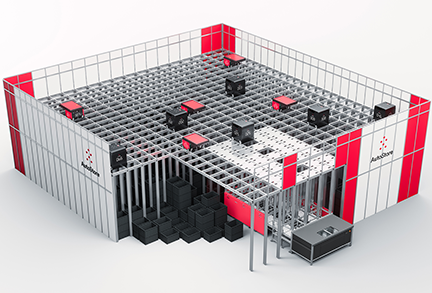
You might overlook the ROI potential of storage density. But being able to fit four times as much inventory into the same building greatly reduces or eliminates the need for a new site, building expansion, or renovation, while freeing up space for growth.
AutoStore is a highly flexible and scalable set of modules that is relatively easy to install and configure to suit individual business needs. The aluminum Grid, for example, can easily adapt to most commercial spaces, even those with irregular layouts, making it ideal for businesses with growth ambitions.
Data accuracy - How much will I save by reducing errors and increasing efficiency?
Having highly accurate inventory data is a valuable and often-overlooked ROI benefit of automation. Combined with a modern warehouse management system (WMS), an automated system brings nearly perfect precision to tracking goods, reducing the possibility of order errors, costly returns, and customer dissatisfaction.
In 2022, companies relying on manual operations see anywhere from 1% to 3% of stock lost, stolen, or damaged. AutoStore compacts items into a secure cubic Grid that's only accessible to a few trained associates. This makes it difficult to steal merchandise or damage products, and heavily reduces errors in picking. Reduction in damage, shrinkage and missed picks can often provide a positive ROI all by themselves!
Staff retention - How can I make my employees’ jobs more fulfilling and efficient?
What's causing annual turnover rates of 200% to 300% in some warehouses? It is hard and often thankless work, to put it bluntly. In some operations, people walk 8 to 12 miles per day to retrieve items from shelves, in addition to performing repetitive heavy lifting. The strain not only leads to work absences and expensive medical claims, but also causes people to quit. The cost of finding, onboarding, and training new people can easily be as much as $5,000 per person.
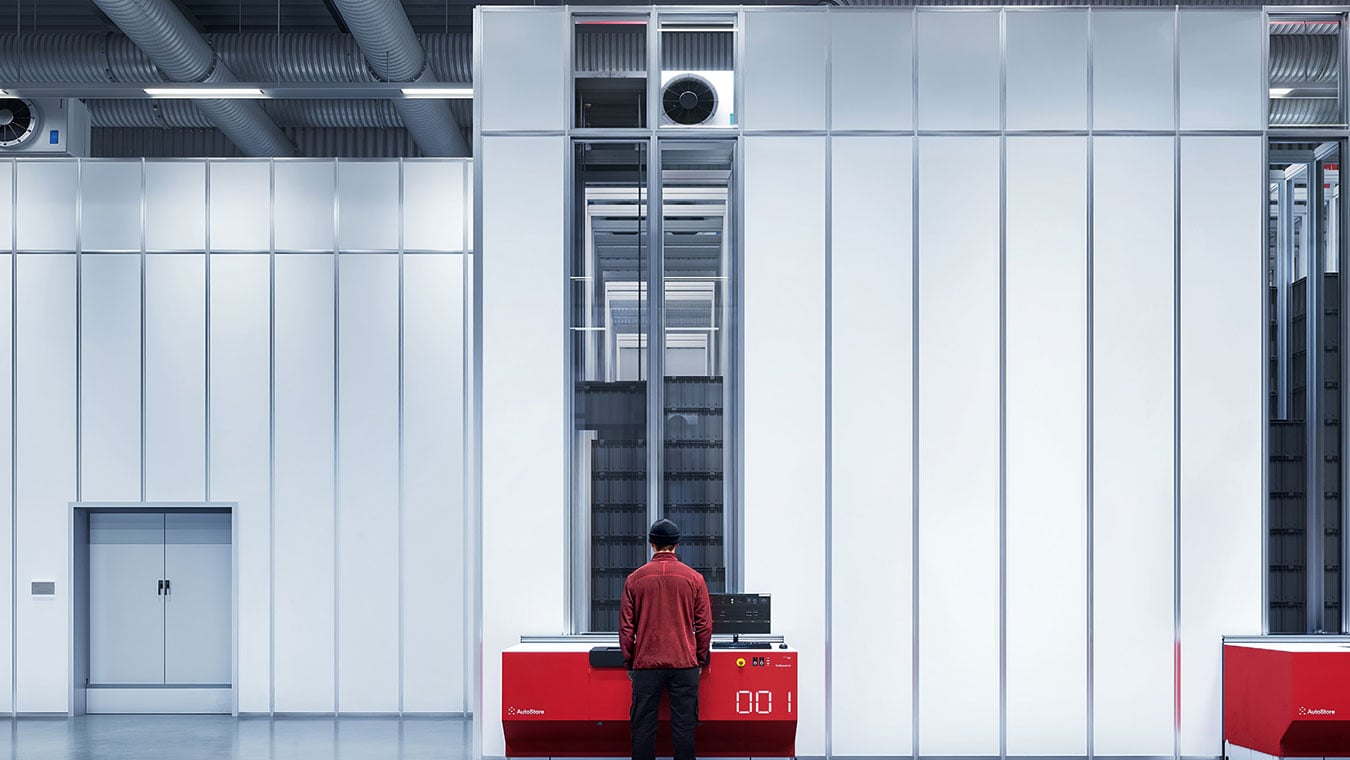
A goods-to-person system like AutoStore uses robots to bring items directly to workers instead of the other way around, making work safer and less stressful, and increasing the likelihood that staff will remain on the job. AutoStore deployments see both increased pick rates per person, and higher staff retention rates as the roles become less physically demanding.
Energy usage - How far can lower my energy bill?
Who’s ever heard of an 85% drop in electricity bills? It happened at Davcor after they stood up their AutoStore solution, but that's by no means an isolated example. An increase in the volume of powered equipment can often lead to an increase in operating energy costs. But AutoStore is dramatically more energy efficient than other similar solutions. The power required to operate 10 robots is equivalent to a single vacuum cleaner. Also remember how much less energy is required to light, heat, and cool a highly dense space like an AutoStore Grid that can shrink square footage by 75%.
Confidence - Can I increase system uptime and improve the mean time between failures?
Finally, a key point to consider in any investment in automation relates to confidence in the solution you are deploying. A system that consistently meets and exceeds design criteria and has redundancies built in to ensure extremely high uptime gives operators confidence on performance issues, but also provides confidence in initial ROI calculations.
Automation is a unique investment
Bottom line is that you shouldn't treat automation like any other investment. When you adopt warehouse robotics and digitized systems like WMS, you're not taking a small step at modernizing. You are making a fundamental change to the way you do business. But, while automation is often perceived as a risky investment, clearly understanding your goals and success metrics is vital in determining the success of the project. The cost savings with automation extend far beyond increased productivity of staff, so it is important to keep those at forefront of your assessment.
When considering automation, it is imperative to take a holistic view of all the benefits offered by a solution and factor those into your decision-making. Understand how the system will impact your day-to-day operations and solve the business challenges that caused you to seek out new technology. But don’t forget the other benefits that you might not see up-front: Improvements in data accuracy, inventory management, worker satisfaction, safety, energy, and space usage can deliver returns far beyond initial expectations.
/2025-02%20AutoStore%20Logo%20Landscape%20(red%20white).png?width=1920&height=338&name=2025-02%20AutoStore%20Logo%20Landscape%20(red%20white).png)
/2025-02%20AutoStore%20Logo%20Landscape%20(red%20black).png?width=1920&height=337&name=2025-02%20AutoStore%20Logo%20Landscape%20(red%20black).png)