/2025-02%20AutoStore%20Logo%20Landscape%20(red%20white).png?width=175&height=31&name=2025-02%20AutoStore%20Logo%20Landscape%20(red%20white).png "2025-02 AutoStore Logo Landscape (red white)")
/2025-02%20AutoStore%20Logo%20Landscape%20(red%20black).png?width=175&height=31&name=2025-02%20AutoStore%20Logo%20Landscape%20(red%20black).png "2025-02 AutoStore Logo Landscape (red black)")



Micro-fulfillment Centers (MFCs): The 'Hyperlocal' Solution
What are Micro Fulfillment Centers? How do MFCs blend manual and automated solutions? Learn about the AutoStore "Hyperlocal" MFC solution here.

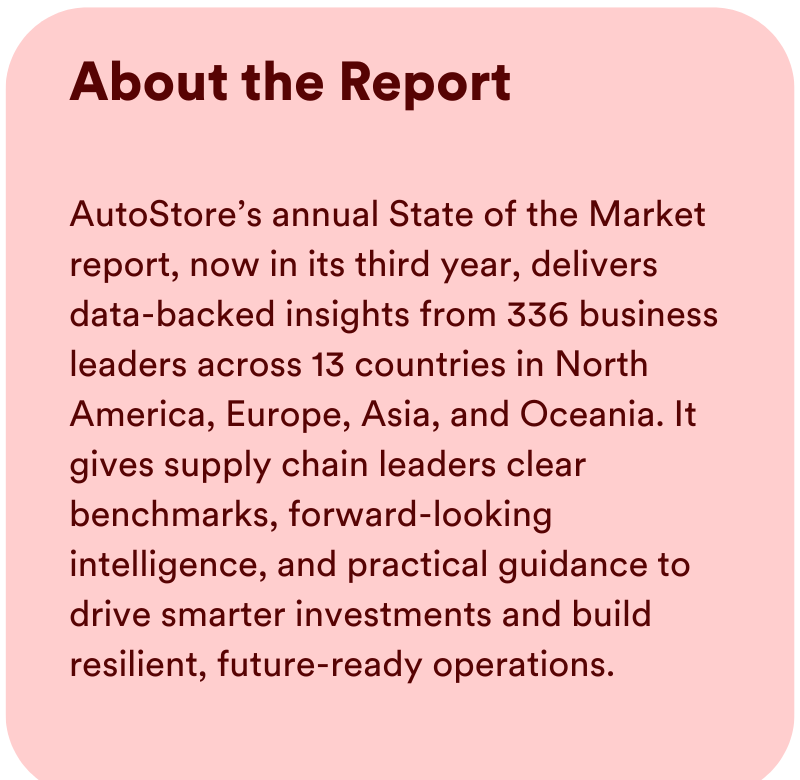
At AutoStore, we work hard to help our customers understand the fast‑moving dynamics shaping warehouse and fulfillment excellence. This year’s State of the Market (SOM) report does exactly that. More than a snapshot of 2026, it captures a pivotal moment, one where AI in logistics, advanced automation, and a reset in business priorities have shifted from future ambition to immediate operational requirement.
For organizations striving to deliver consistently better service in a volatile environment, understanding these shifts isn’t optional. It’s foundational. Below are a few reflections as I look at where the market is heading and what it means for fulfillment leaders preparing for what comes next.
What’s changing most is not simply the rise of automation or AI, but the way decisions are made across the fulfillment lifecycle. Competitive advantage is increasingly defined by decision velocity, which is the ability to sense, decide, and execute continuously across software, machines, and people. Fulfillment is becoming an intelligent system of orchestration, where every action is part of a coordinated loop rather than a standalone process.
The digital age has fundamentally reshaped customer expectations, and we see this evolution across every vertical. Speed alone is no longer the differentiator. Customers expect accuracy, transparency, and a seamless experience whether they’re online, in the store, or moving between both.
This push for immediacy, paired with the ongoing expansion of e‑commerce, has placed unprecedented pressure on traditional fulfillment strategies. The question is no longer how quickly we can move goods, but whether our infrastructure can keep pace with demand that changes in real time.
The SOM report makes this shift clear. Static, labor‑heavy warehouses can no longer support the agility today’s consumers expect. Businesses now require intelligent, adaptive systems capable of forecasting demand, orchestrating resources, and flexing automatically under pressure. Fulfillment is becoming an ecosystem that must deliver consistency even when market conditions are down.
At AutoStore, our focus remains on enabling customers to meet these rising expectations with confidence and resilience. Excellence today is not about surviving volatility; it’s about building operations designed to excel within it.
"The organizations that win next won't be the most automated. They'll be the most intelligently orchestrated."
— Isabel Rocher, Senior Vice President of Global Growth Marketing & Communication
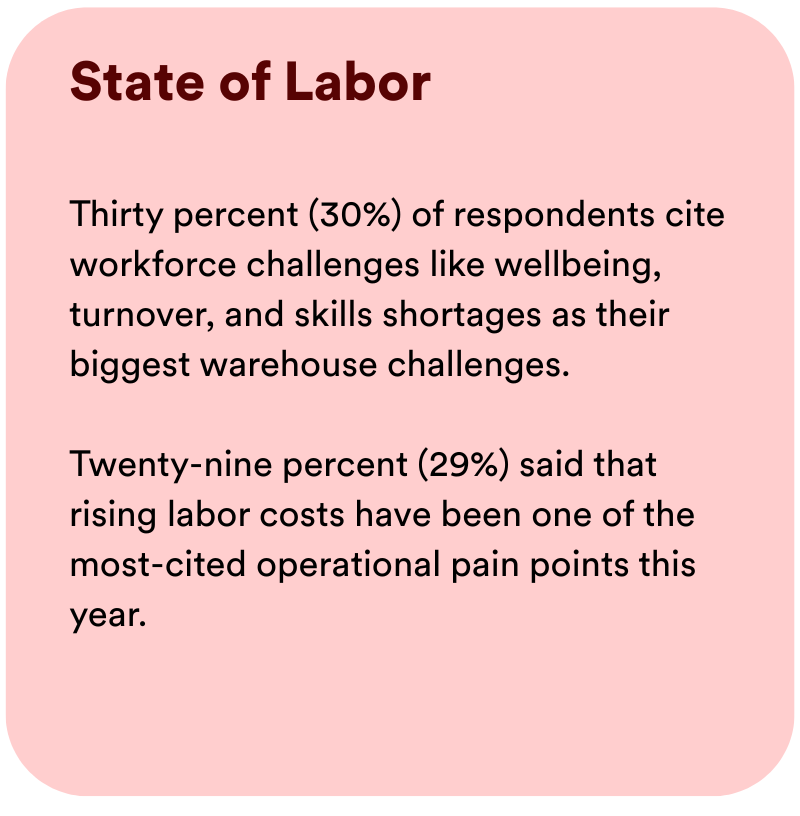
Labor challenges continue to be one of the most significant constraints facing global logistics. The SOM findings reinforce what leaders have been experiencing for years: The gap between available workforce capacity and operational demand is widening.
Demographics, shifting job preferences, and the physical demands of warehouse work all play a role. The consequences for organizations reliant on manual operations are direct. They’ll see higher costs, lower throughput, and persistent bottlenecks.
This is precisely why automation matters. Not as a replacement for human capability, but as an essential complement to it.
Robotics and AS/RS technologies allow human teams to focus on more complex, judgment‑driven tasks: Supervision, maintenance, quality assurance, and process improvement. When automation carries the physical load, accuracy improves, safety rises, and workflows stabilize. The result is a more attractive, productive workplace and a far more resilient operation.
Automation is no longer the alternative. It’s the answer.
If automation is the engine, AI is increasingly the coordination layer that aligns forecasting, inventory, automation, and execution into a single learning system. Our 2026 report shows just how quickly AI has shifted from exploratory concept to operational backbone.
AI is no longer just enabling warehouses to move from reactive to predictive. It's creating closed‑loop systems that continually refine decisions. By connecting demand signals, inventory logic, and real‑time automation activity, AI strengthens the precision and consistency of every operational flow.
Instead of optimizing isolated tasks like routing, slotting, or maintenance, AI is increasingly orchestrating them in concert. Each use case becomes part of a broader, interconnected decision cycle, where every action generates feedback that improves the next one.
For many businesses, this shift toward orchestration intelligence translates directly into better capital deployment, reduced operational risk, and stronger service performance. AI is becoming the digital twin of the fulfillment network, constantly learning, coordinating, and elevating intelligence across the entire supply chain.
The past few years have revealed how fragile global supply chains can be. Leaders have shifted their priorities accordingly, and the SOM report highlights this transition: Resilience now outweighs pure lean efficiency.
Organizations are diversifying suppliers, building buffer stock where appropriate, and decentralizing fulfillment. The era of single, mega‑scale distribution centers is giving way to strategically placed micro‑fulfillment nodes, particularly near dense population centers.
This transformation isn’t just about risk mitigation. It’s about speed. Distributed fulfillment brings inventory closer to the customer, reducing last‑mile costs and enabling faster, more reliable delivery.
For AutoStore partners who sell our technology, this era opens the door to new technology integration across smaller, more agile environments. To our investors, it signifies a commitment to future-proofing operations, driving sustainable growth, and securing a leading position in an increasingly competitive global economy.
And for our customers, the end users deploying AutoStore throughout their businesses, it creates a supply chain built to withstand disruption rather than react to it.
This geographic rebalancing is becoming a foundation for future warehouse excellence.
After more than 30 years in the industry, I’ve seen automation move from an emerging concept to a widely accepted necessity. Today, the question is no longer whether to automate. The question is how to architect the right ecosystem.
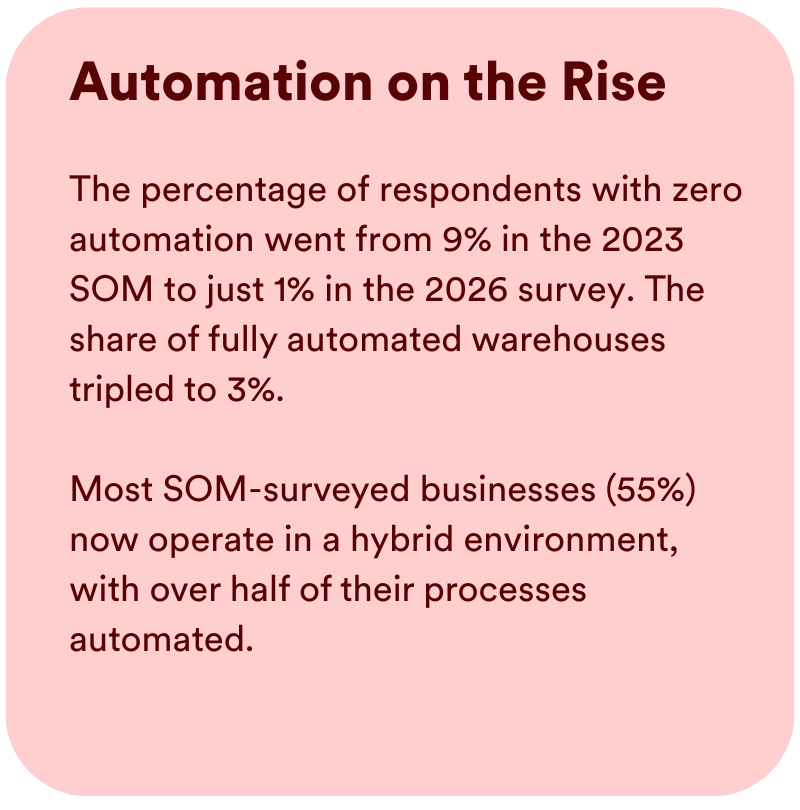
The SOM report reinforces this evolution. AS/RS technology, autonomous mobile robots (AMRs), and advanced sorting systems deliver measurable improvements in throughput, accuracy, and storage density. They transform warehouses from cost centers into strategic, performance‑driven assets.
Take high‑density AS/RS systems: They store goods efficiently, retrieve them with speed and precision, and reduce physical footprint. When connected to intelligent software and AI, they become part of a coordinated, data‑driven operation where every movement is purposeful.
This is the new model: Physical automation infused with digital intelligence. Together, they form the cornerstone of modern fulfillment, delivering unmatched productivity and a sustainable competitive edge.
After reviewing this year’s SOM report, one theme stands out: Excellence is expanding.
It’s no longer defined by faster pick rates or incremental efficiency.
Excellence now requires:
The future warehouse operates as an integrated, intelligent organism where resilience, efficiency, and innovation reinforce each other.
As we look toward 2026 and beyond, the winners will be those who pair smart automation with adaptable strategies, who treat data as a strategic asset, and who design fulfillment networks capable of thriving in a dynamic world.
The organizations that win next won't be the most automated. They'll be the most intelligently orchestrated.
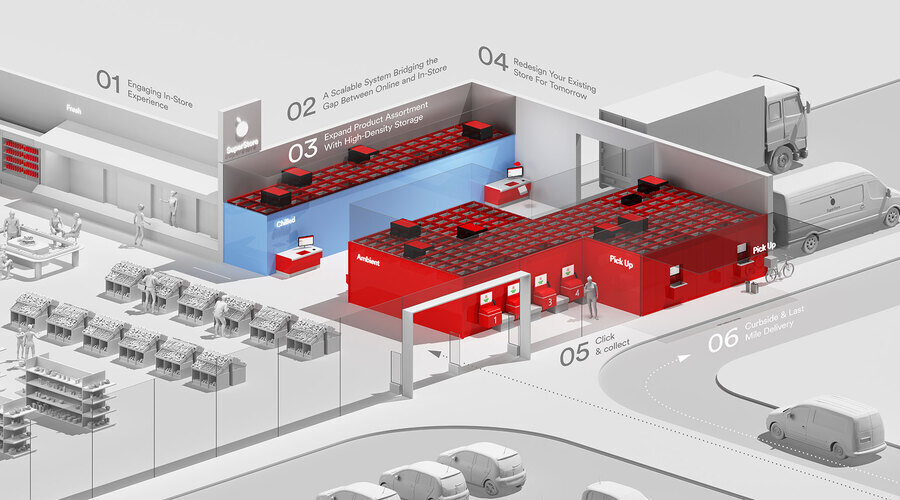
What are Micro Fulfillment Centers? How do MFCs blend manual and automated solutions? Learn about the AutoStore "Hyperlocal" MFC solution here.

In the competitive world of e-commerce, efficient and effective order fulfillment is crucial for maintaining customer satisfaction and ensuring...

As if retailers didn’t have enough on their plates keeping up with customer demands, theft continues to escalate in North America, drastically...
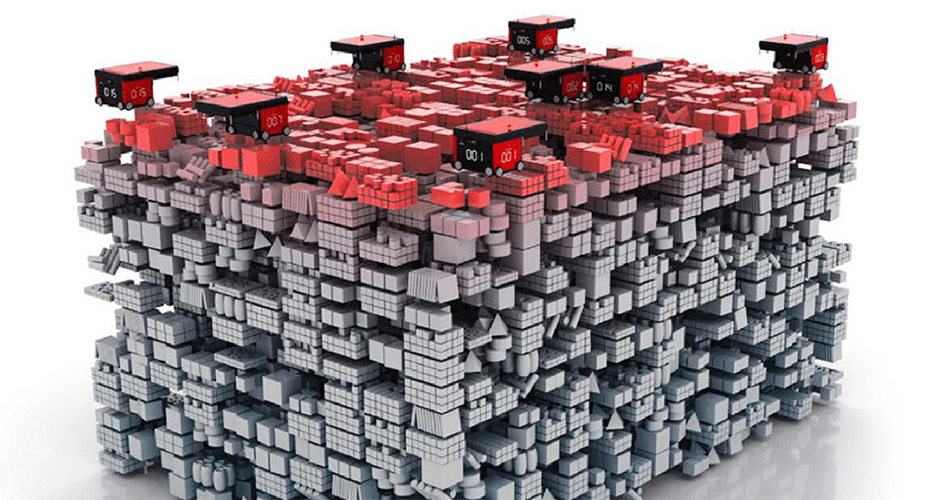
Think slotting isn't important? Think again. It's an absolute essential of inventory management. Get it wrong, and you risk higher labor costs,...