CubeVerse™ Explained: How AutoStore Is Building the Intelligent Fulfillment Platform of the Future
As warehouse automation systems grow in scale and complexity, software is playing an increasingly critical role in how performance is delivered and...
3 min read
Table of Contents
Warehouse automation is already good at doing the job. What it hasn’t been good at, until now, is getting better at the job on its own. This blog looks at how AutoStore Intelligence changes that by helping systems spot issues earlier, improve performance over time, and give operators clearer answers about what to do next.
Warehouse automation has proven over the last three decades to deliver speed, density, and reliability. But even the most advanced systems have historically shared a limitation. They execute exceptionally well, but they don't optimize and improve on their own and the decisions that shape their performance are still made largely on assumptions.
AutoStore Intelligence is designed to address that gap. Its purpose is not to chase autonomy for its own sake, but to make decisions across the system's life data-backed rather than assumption-based: defensible investment cases, right-sized designs, and daily operation with fewer surprises, faster problem resolution, and clearer guidance on what matters most.
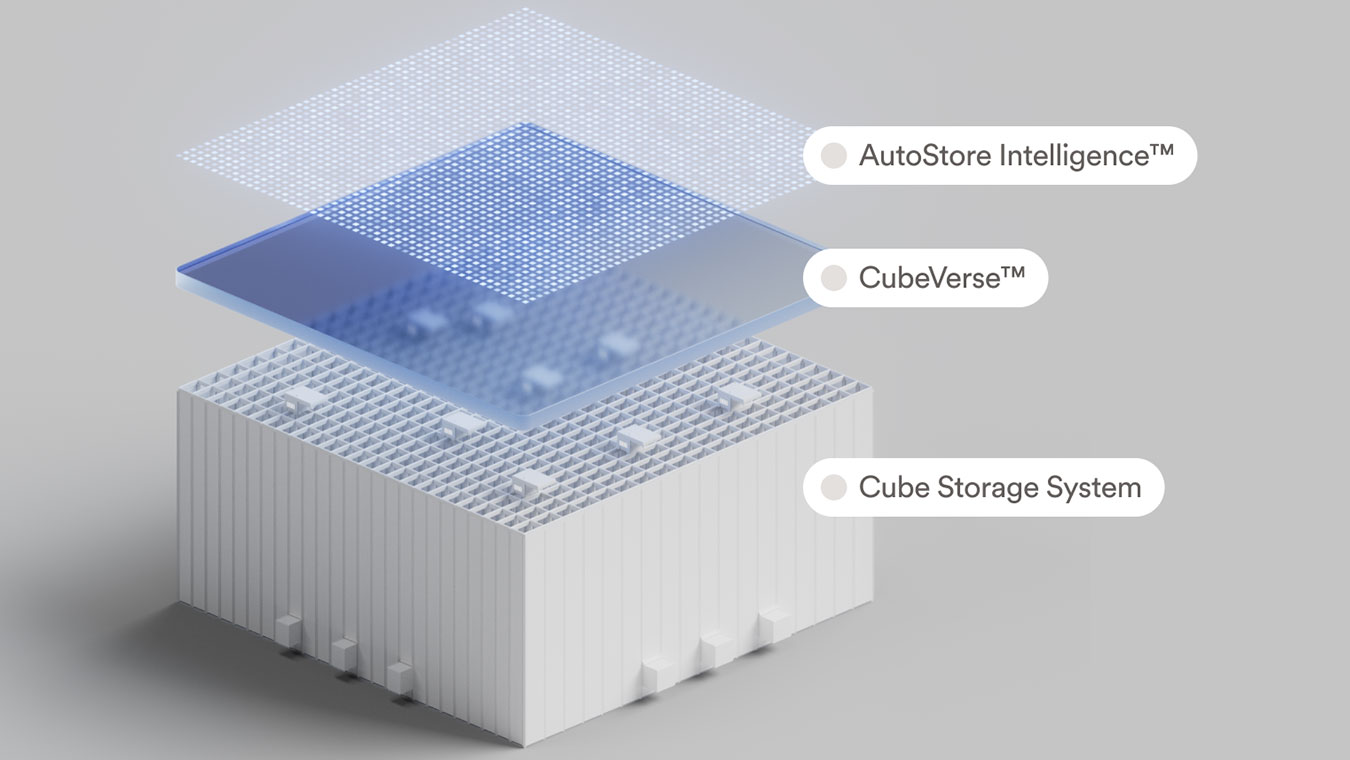
AutoStore Intelligence is the AI-driven optimization layer embedded within CubeVerse™, AutoStore's unified software environment. CubeVerse connects insights across design, simulation, control, analytics, and fleet health and maintenance to give greater confidence to your investment decisions and to improve overall system performance and reliability.
Those stages form a logical progression, and each is empowered by AutoStore Intelligence working on data drawn from across the AutoStore install base:
Plan — business case development through CubeExplore™, and solution design and performance validation through CubeStudio™.
Execute — Robot routing and throughput tuned in CubeControl™.
Show — CubeAnalytics™ shows what the system is doing, turning operational data into clear, prioritized insight.
Monitor — CubeFleet™ helps users monitor module health, surface maintenance needs, and manage service activities from a single connected view across sites.
Instead of moving between disconnected applications, teams work within one software context with shared data underneath. That structure matters, because when data lives apart, insight stays fragmented. Calling AutoStore Intelligence a “layer” is simply a way of describing that span.
A common assumption is that AI in the warehouse should behave like the general-purpose tools we use every day. Those systems are built to find what is typical. In warehousing, the value is in what is unusual. These rarely show up clearly in standard reports, and they are where most costly disruption starts.
AutoStore Intelligence is built for that kind of problem. It identifies outliers, understands what is causing them, and helps operators act. The same body of operational data informs how systems are planned and designed, so the decisions made before commitment are as evidence-based as the ones made on the floor.
AutoStore Intelligence connects insight across the entire lifecycle of a system and builds on it over time.
The success of an automation project is largely determined before implementation begins, yet quantifying and justifying ROI remains the leading barrier to securing approval. AutoStore Intelligence in CubeExplore™ turns that into intelligence-guided business case development. Grounded in operational benchmarks and comparable projects, it generates financial projections, investment scenarios, directional configurations, and relevant case studies to produce a defensible business case in minutes rather than weeks of spreadsheet work.
Before a system is installed, AutoStore Intelligence in CubeStudio™ shapes how it should be built. An agentic design assistant recommends modules and compares performance scenarios against customer requirements, drawing on comparable projects and operational benchmarks. This avoids overbuilding while still meeting performance requirements. It also compresses simulation feedback loops from 10 to 20 iterations down to 1 to 2, reaching the same level of confidence in a fraction of the time.
In daily operations, the hardest part has always been knowing where to look. CubeAnalytics™, powered by AutoStore Intelligence, brings forward what needs attention, explains what is likely causing it, and points to the next step. A multi-site view extends that across a portfolio. This allows teams to compare every site they operate from one secure interface and focus on the sites that matter most, so the ones requiring attention identify themselves rather than emerging from manual cross-site reporting.
Wear and tear is a reality in any automated system. It's difficult to see it early enough to act. AutoStore Intelligence looks for early signals that something is changing, determines whether the issue is isolated or part of a broader pattern, and narrows the behavior down to a specific component. With CubeFleet™, that insight becomes action. Alerts and work orders are generated automatically when modules reach predefined maintenance thresholds, using live operational usage data from CubeAnalytics, each with step-by-step service guidance.
Within CubeControl™, intelligence is applied to how the Grid actually runs. Rather than relying solely on fixed logic, routing behavior is tuned to real usage patterns by reducing congestion, improving flow in high-traffic areas, and in many cases delivering meaningful throughput gains through software alone, without adding hardware.
AutoStore Intelligence turns AutoStore from a system that executes tasks into one that informs the decisions around it. This happens before investment, during design, and throughout daily operation. It helps teams solve problems faster, operate more efficiently, and make better decisions grounded in data and intelligence. In a fulfillment environment where complexity is only increasing, that is what sets systems apart.
As warehouse automation systems grow in scale and complexity, software is playing an increasingly critical role in how performance is delivered and...
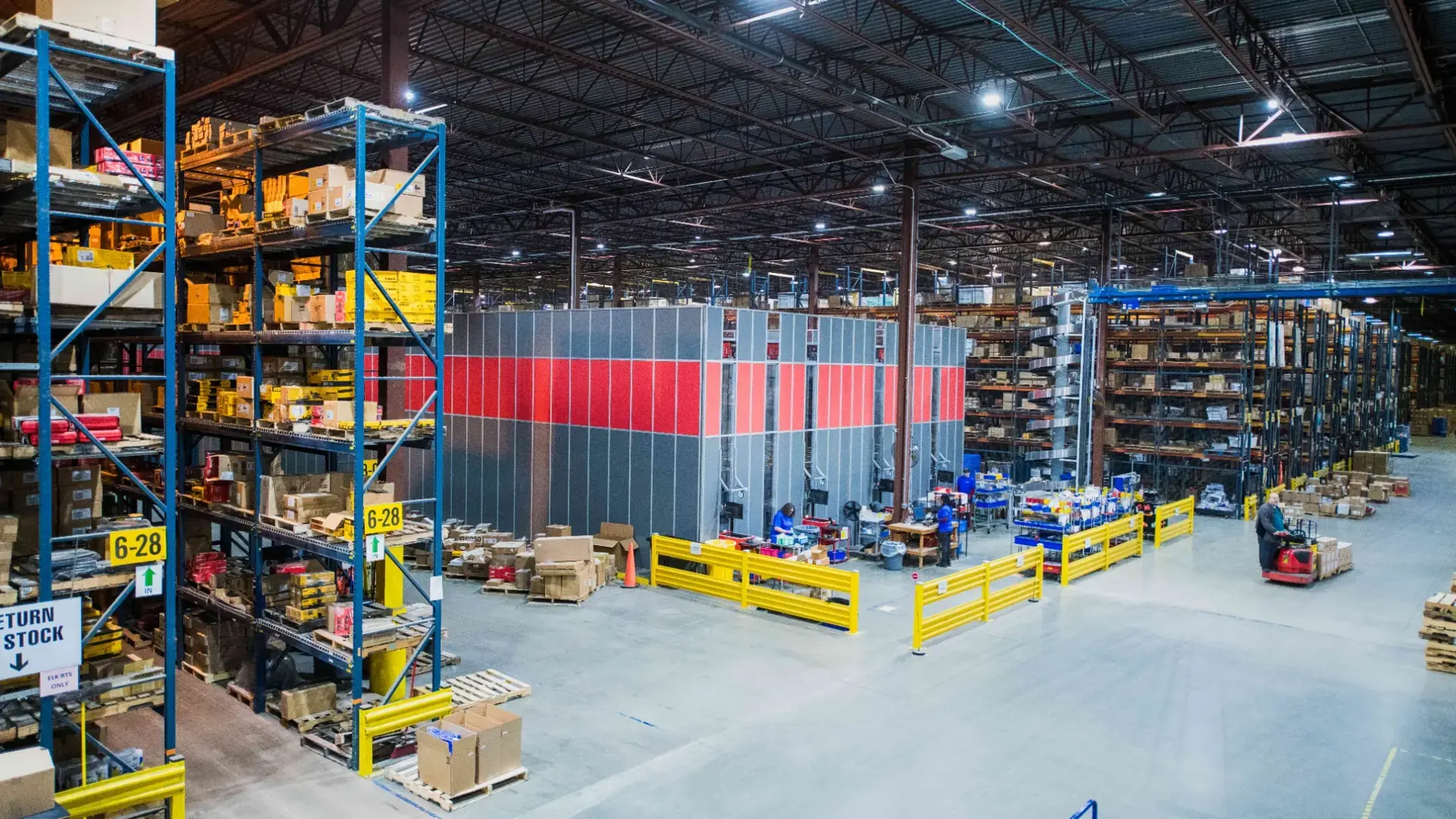
How AutoStore enables phased automation in live, space-constrained warehouse environments.

Intelligent fulfillment is redefining warehouse performance by shifting the focus from physical throughput to decision-driven execution. Explore how...
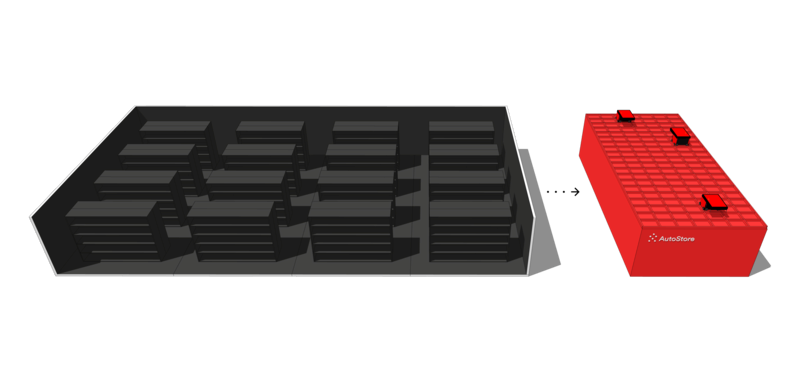
Discover the advantages of AutoStore's simplicity in automated warehousing. Learn how its user-friendly design, ease of implementation, and space...