


CubeVerse™ Explained: How AutoStore Is Building the Intelligent Fulfillment Platform of the Future
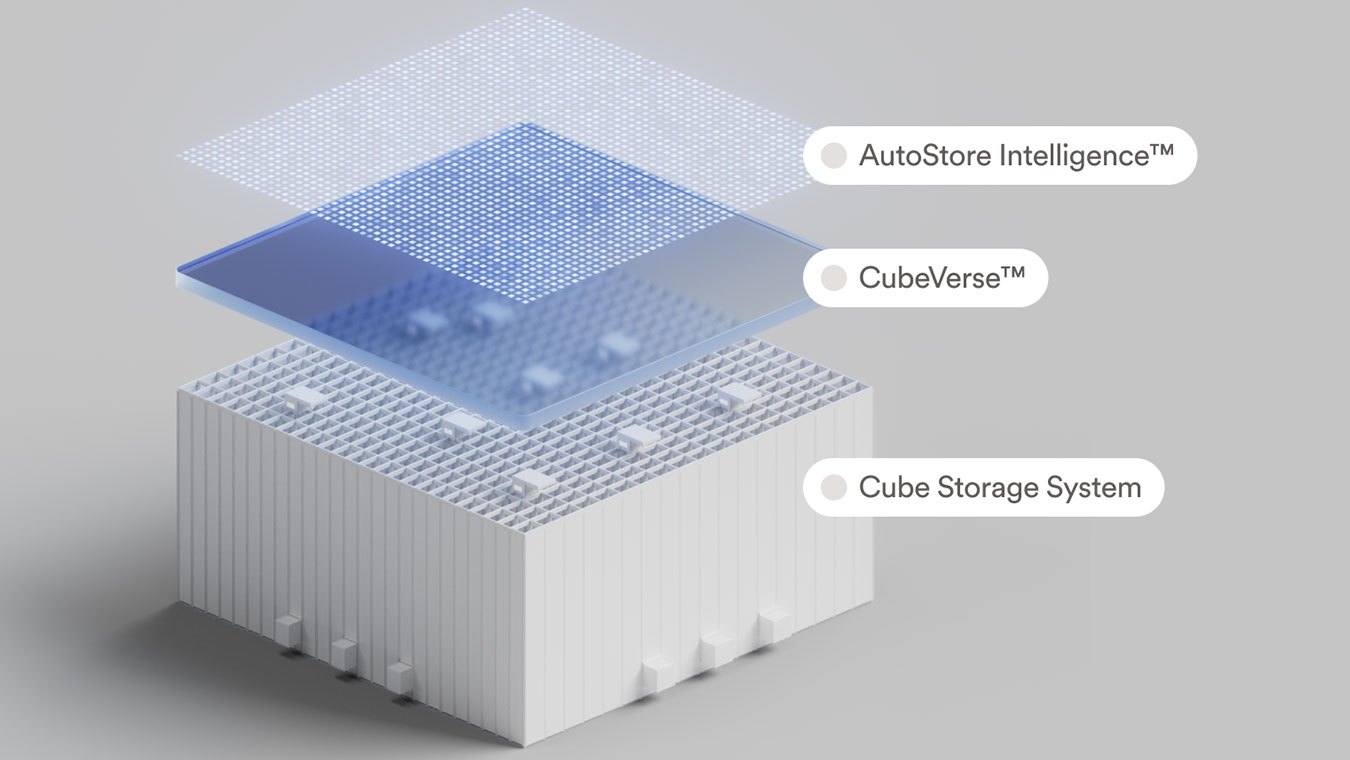
As warehouse automation systems grow in scale and complexity, software is playing an increasingly critical role in how performance is delivered and...
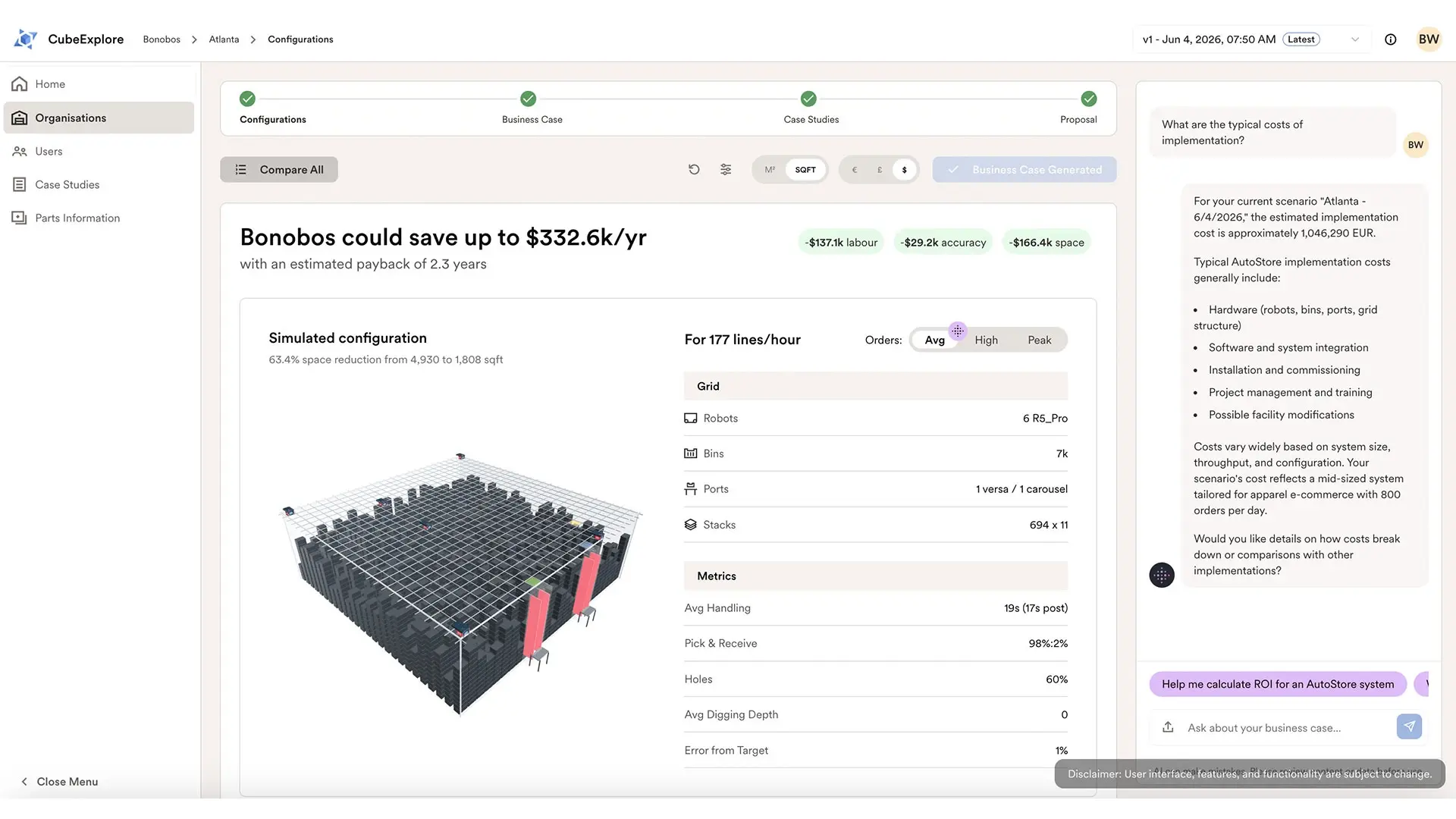
AutoStore Intelligence™ in CubeStudio™ and CubeExplore™ bring more data-grounded intelligence to two critical stages of warehouse automation planning: developing the solution and evaluating the investment opportunity. Together, they help AutoStore and partner teams move from early business-case assessment to detailed solution design with greater confidence. Explore the role each plays and how they support better-informed decisions before deployment begins.
Every automation investment starts with a question: Will the expected benefits justify the cost?
Organizations often answer that question through spreadsheets. While useful, spreadsheet-based ROI models can rely on generalized assumptions that don't fully capture the complexity of fulfillment operations. They may not reflect operational benchmarks, comparable projects, or the experience gained from real-world deployments.
CubeExplore addresses this challenge by helping AutoStore and partner teams build stronger investment cases from the outset. Using generative AI, operational benchmarks from comparable AutoStore projects, and relevant deployment data, it produces financial projections, directional configurations, and supporting case studies. A conversational assistant allows teams to test alternative assumptions and compare different investment scenarios before presenting a recommendation.
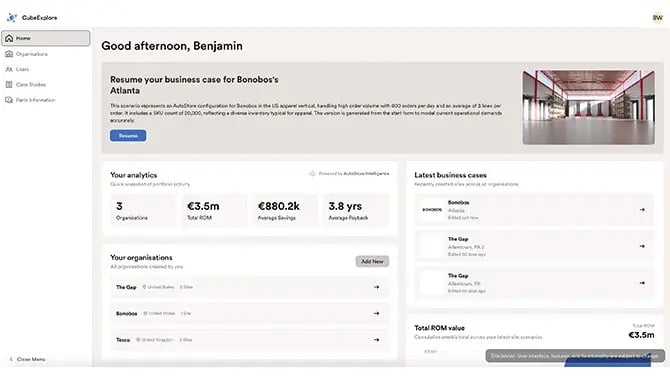
CubeExplore uses generative AI and AutoStore project data to help teams test assumptions, compare investment scenarios, and build better-informed business cases faster.
The result is not simply a faster ROI calculation. It is a more informed starting point for evaluating automation opportunities. Business cases that previously required weeks of spreadsheet work can be developed in minutes, giving stakeholders a clearer basis for discussion much earlier in the process.
But determining whether an investment appears attractive on paper is only part of the challenge.
Once a business case has been established, attention shifts to solution design.
This is where many investment processes begin to diverge. Financial assumptions are developed in one workflow, while engineering decisions are made in another. The connection between the two can become difficult to maintain as countless design variables are evaluated.
AutoStore Intelligence in CubeStudio helps bridge that gap.
Working from the operational objectives identified during the planning process, its agentic design assistant recommends modules and compares performance scenarios against customer expectations. Design teams can evaluate different approaches, understand the implications of their choices, and compare outcomes more efficiently than through traditional simulation workflows.
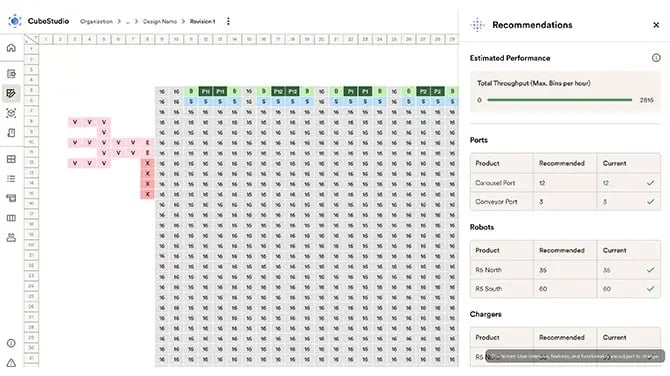
After a business case is established in CubeExplore, teams use AutoStore Intelligence in CubeStudio to turn business objectives into solution designs, including recommended modules.
Importantly, the goal is not to automate design decisions. The intelligence supports solution-design expertise by helping teams explore alternatives more quickly and consistently.
This allows the proposed solution to be tested against the objectives that justified the investment in the first place.
The real value emerges when these capabilities are considered together.
CubeExplore helps determine whether an investment scenario appears financially attractive. CubeStudio helps evaluate whether a solution can realistically support the assumptions behind that scenario.
CubeExplore establishes the investment case early in the engagement, based on the solution expected at that stage. AutoStore Intelligence in CubeStudio then carries those objectives into detailed design, comparing performance scenarios to confirm the solution can deliver what the business case set out to achieve.
What connects the two is not a back-and-forth between tools, but a shared foundation. Because both draw on AutoStore solution performance data from comparable projects, the business case and the engineering decisions rest on the same data-grounded insight rather than on separate sets of assumptions.
For finance stakeholders, that means greater visibility into how expected returns relate to actual system design. For engineering teams, it means evaluating configurations within the broader context of business outcomes rather than technical requirements alone.
The outcome is a proposal that is supported by both financial analysis and validated solution planning before major capital decisions are made.
The benefits extend beyond stronger decision-making.
CubeExplore accelerates business-case development, allowing teams to move beyond manual spreadsheet modeling and scenario building. At the same time, CubeStudio reduces simulation iterations from between 10 and 20 to between one and two while maintaining the same confidence level. CubeStudio also combines design, simulation, and validation in a single workspace, reducing file handoffs by 95%. Together, these capabilities help teams spend less time moving information between tools and more time evaluating the quality of the decision itself.
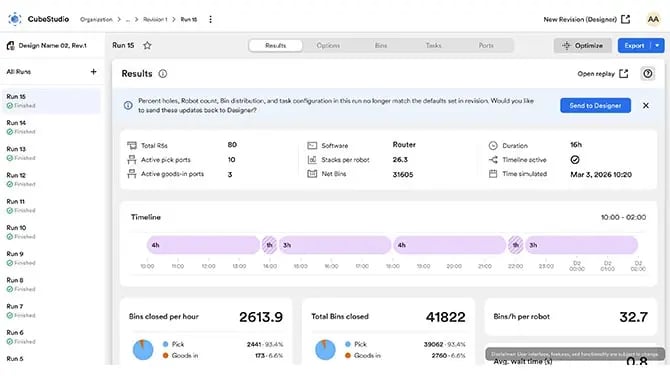
CubeStudio brings design, simulation, and validation into one workspace, cutting simulation iterations from 10–20 to 1–2 with the same confidence and reducing file handoffs by 95%.
They also help reduce the risk of common planning challenges, including overbuilding a solution, underestimating future requirements, or discovering design limitations late in the evaluation process. By identifying these issues earlier, organizations can make more informed trade-offs before significant resources are committed.
For finance and engineering leaders alike, the natural question is where the intelligence comes from.
CubeExplore’s early-stage assessments and the design guidance provided by CubeStudio are informed by operational benchmarks, solution design patterns, AutoStore performance data, and simulation results. These insights help teams evaluate opportunities through the lens of similar implementations and validated design scenarios rather than relying exclusively on generalized assumptions.
As part of the Fall 2026 product announcement, both capabilities are presented as tools used by AutoStore and authorized partners. Customers do not operate them directly. Instead, they benefit from stronger early-stage investment assessments and solution designs supported by relevant AutoStore data, comparable projects, and simulations.
Many discussions around automation focus on what happens after a system goes live. Equally important are the decisions made before deployment begins.
CubeExplore and AutoStore Intelligence in CubeStudio support distinct stages of this pre-deployment process. CubeExplore strengthens the early investment assessment, while AutoStore Intelligence helps teams develop and validate the detailed solution design. Together, they bring more data-grounded intelligence to the decisions made before an automation system is deployed.
As warehouse automation systems grow in scale and complexity, software is playing an increasingly critical role in how performance is delivered and...

In large, high-density AutoStore systems, there are often opportunities to further enhance throughput, especially during peak operations. Read on to...

Learn about CubeAnalytics, a tool providing advanced data analytics of your AutoStore system through a user-friendly and intuitive interface. Unlock...
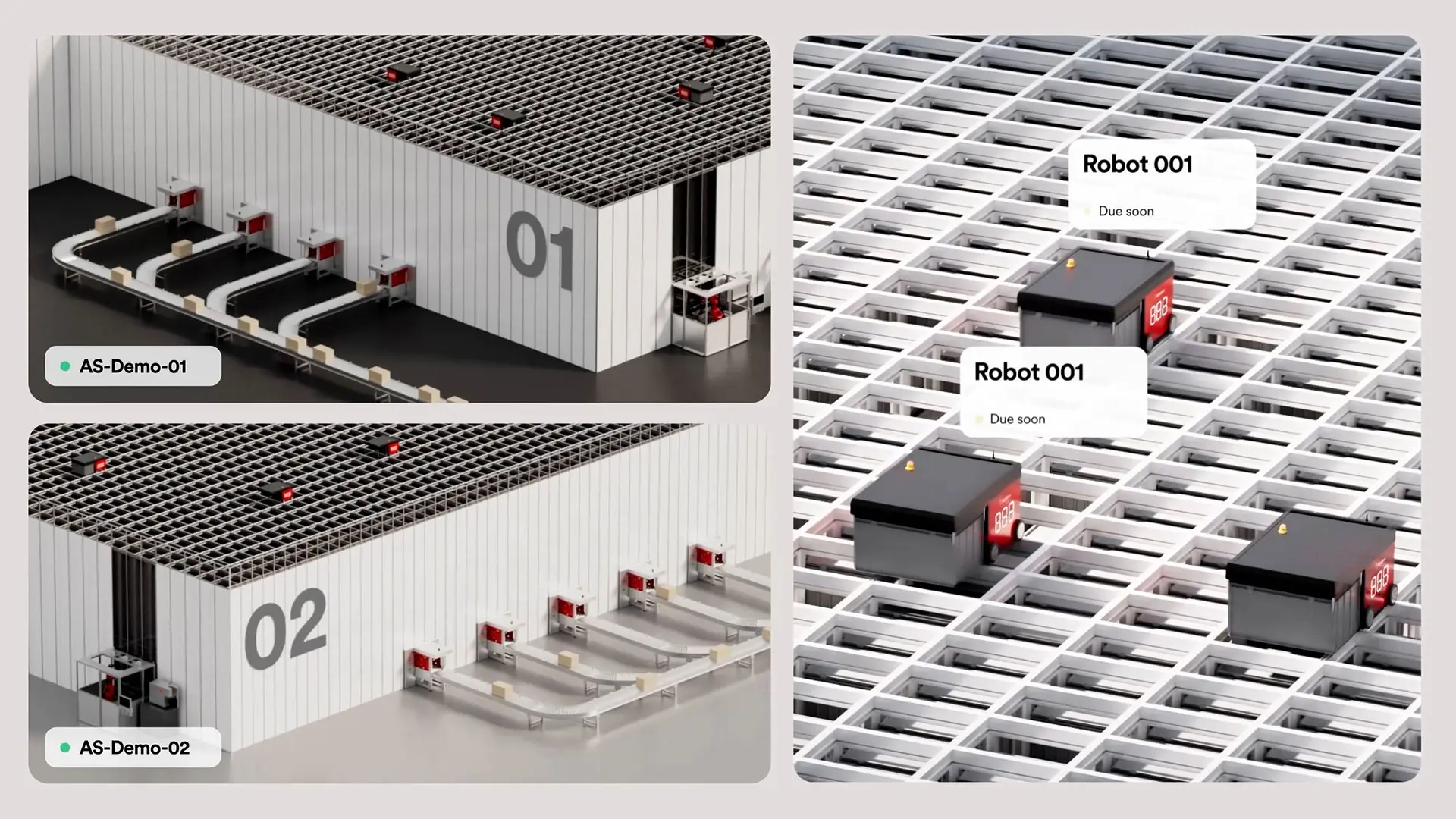
CubeFleet provides a centralized view of fleet health, maintenance requirements, work orders, service history, and service activity across one or...