/2025-02%20AutoStore%20Logo%20Landscape%20(red%20white).png?width=175&height=31&name=2025-02%20AutoStore%20Logo%20Landscape%20(red%20white).png "2025-02 AutoStore Logo Landscape (red white)")
/2025-02%20AutoStore%20Logo%20Landscape%20(red%20black).png?width=175&height=31&name=2025-02%20AutoStore%20Logo%20Landscape%20(red%20black).png "2025-02 AutoStore Logo Landscape (red black)")
.svg)


What the AutoStore 2026 State of the Market Reveals About Throughput
Throughput is widely recognized as a critical success factor in fulfillment but the latest data shows many operations are still struggling to improve...
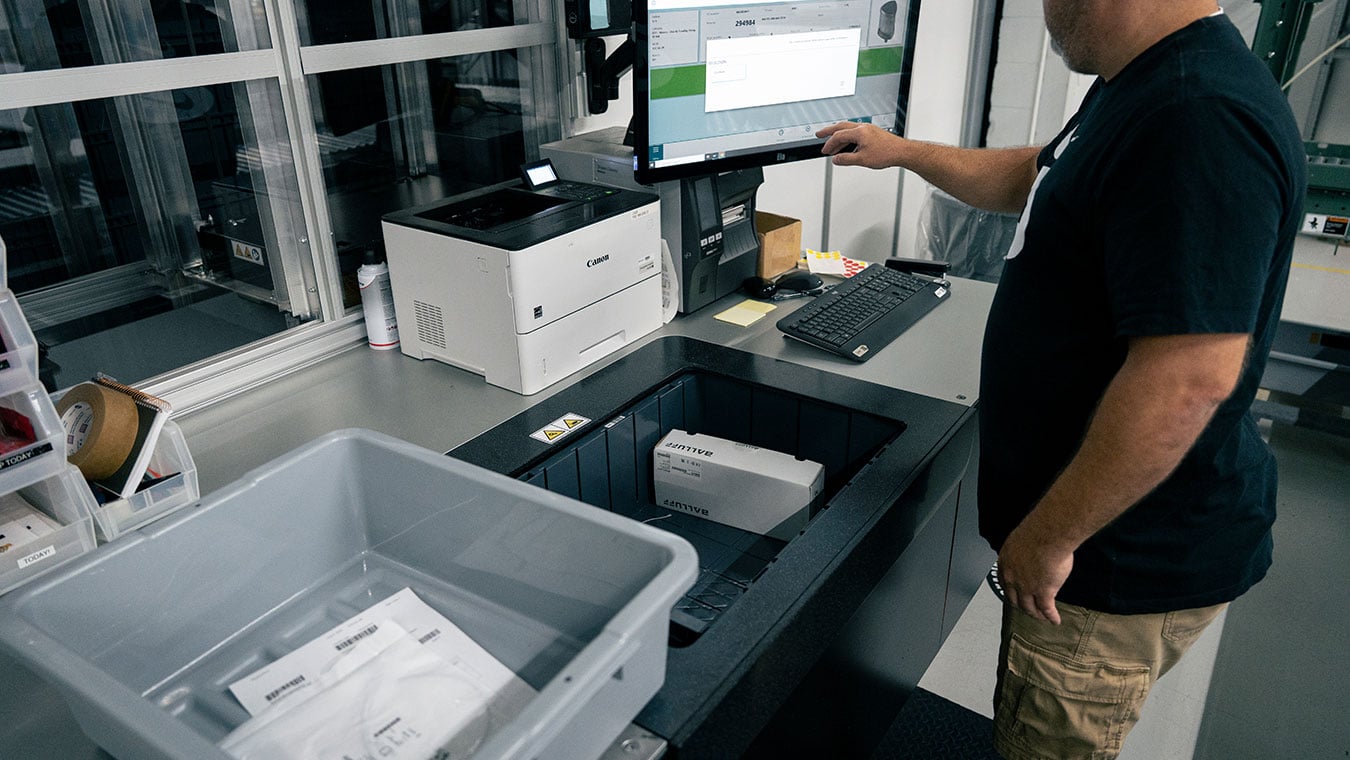
Warehouse performance has often been measured by robot count, throughput rates, and square footage of a facility. But those metrics no longer tell the full story. Dive deep into “The State of Warehouse Management & Fulfillment in 2026” to learn how adaptive decisioning and intelligence-led fulfillment are redefining performance, and what forward-looking leaders can do today to stay ahead.
Warehouse automation has been defined by scale depending upon how many Robots you have, your throughput rates, and physical footprint of your building.
This growth has delivered real gains but also caused fulfillment environments to become faster and more data-rich. To deal with the complexity, operations can no longer rely on static rules or periodic planning. They need systems that can respond in real time, adjust continuously, and improve as they go.
That’s where adaptive decisioning enters the picture.
In “The State of Warehouse Management & Fulfillment in 2026” this shift is described as a move toward operations that can sense, decide, and act across increasingly complex environments. Adaptive decisioning is one way to understand that change in practice.
Adaptive decisioning is the ability for a fulfillment operation to continuously sense what’s happening, decide what to do, and act on it in real time.
It moves fulfillment beyond execution into a dynamic, responsive system.
In practical terms, that means:
Adjusting workflows as demand patterns shift
Rebalancing inventory placement as order profiles change
Routing work dynamically to avoid congestion or delays
Identifying issues early and acting before they disrupt performance
This is the core of “Intelligent Fulfillment.” It’s a system that continuously adapts and improves using real-time data and embedded intelligence.
The need for adaptive decisioning is driven by how fulfillment has changed. Warehouses today operate in conditions that are fundamentally less predictable:
Demand spikes without warning
SKU assortments expand and contract rapidly
Labor availability fluctuates
Supply chains face constant disruption
Traditional automation was designed for repeatability. It works best when conditions are stable.
But stability is no longer the norm.
As a result, competitive advantage has shifted from how fast you can move product to how quickly you can make and execute better decisions.

Most automated systems are still built to execute predefined workflows.
They are efficient, but they are not adaptive.
This creates a gap. Systems generate massive amounts of data, but decisions remain manual, delayed, or based on historical rules. As a result, bottlenecks emerge faster than teams can respond and performance improvements plateau.
Adaptive decisioning closes that gap by turning operational data into action.
You can see this shift clearly in modern AutoStore-enabled environments.
Take a high-throughput operation. Robots don’t just follow fixed paths, they are orchestrated based on live system conditions. Routing adjusts dynamically to keep orders flowing and avoid congestion. Performance data is continuously analyzed to identify inefficiencies. Systems surface issues and recommend actions before they escalate.
This is enabled by an intelligence layer that:
Identifies patterns and constraints
Predicts disruptions
Recommends or executes optimizations across the system
The result is faster fulfillment that’s also self-improving.
A widely cited AutoStore deployment illustrates this shift.
At Balluff, implementing AutoStore increased throughput by 177%. But the impact wasn’t just driven by adding automation for the company, which is a global leader in industrial sensor technology.
It came from eliminating bottlenecks across the system, improving flow through coordinated execution, and enabling ongoing optimization as conditions changed.
What looks like a throughput story on the surface is actually a decisioning story underneath.
The Balluff system works better not just because it moves faster, but because it makes better decisions continuously.
Adaptive decisioning doesn’t happen without the right foundation.
It depends on clean, consistent operational data, software that connects systems and workflows, and AI that can process complexity and act faster than humans alone.
Within AutoStore, this is delivered through a unified platform called CubeVerse™ where data flows across the entire lifecycle, performance is monitored in real time, and AI models optimize routing, workflows, and system behavior continuously.
This is how decision velocity increases. And in today’s environment, decision velocity is what separates efficient operations from resilient ones.
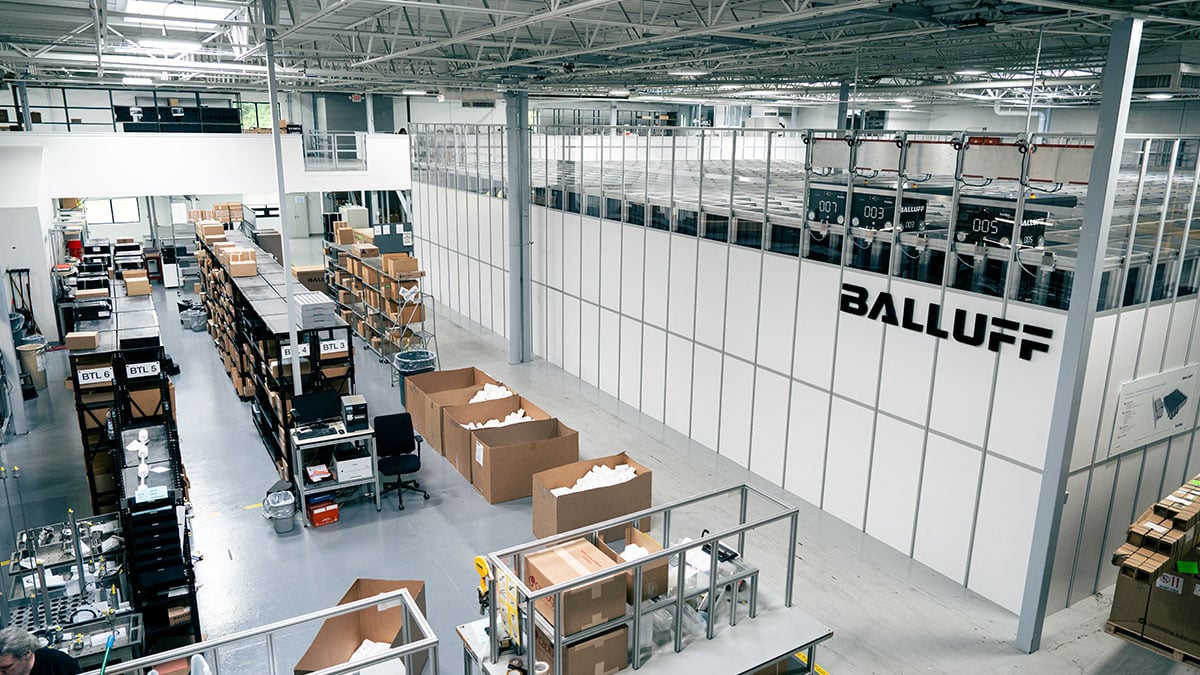
Balluff’s AutoStore-powered facility increased throughput by 177% by removing bottlenecks and coordinating decisions across Robots, workstations, and inventory. The case study shows how intelligent, adaptive decisioning turns raw automation into a continuously improving fulfillment system.
The shift to adaptive decisioning marks a broader transition in the industry.
Fulfillment is no longer a passive endpoint that executes plans created elsewhere.
It is becoming an intelligence-led execution layer that learns from its own performance, adapts to changing business conditions, and optimizes continuously without manual intervention.
In other words, fulfillment is becoming a system that doesn’t just run.
It evolves.
Adaptive decisioning isn’t a feature you add. It’s the outcome of how a system is designed.
When hardware, software, and intelligence are tightly integrated data becomes actionable, decisions become faster and more consistent, and performance improves over time
This is the foundation of Intelligent Fulfillment.
And as volatility becomes the default, it won’t be optional.
It will be the baseline for competing.
Want a deeper dive into the trends shaping fulfillment? Download the State of the Market Report 2026 to explore the full set of insights behind this series.
Throughput is widely recognized as a critical success factor in fulfillment but the latest data shows many operations are still struggling to improve...

Fulfillment is getting harder to manage. Labor is hard to find and costs more, products and orders vary more, and capital is under review, so every...
As 3PL providers increasingly look to warehouse automation to optimize operations, which capabilities will actually add the most value?
Large e-commerce retailers operating with extended hours face challenges including disrupted efficiency, higher labor and real-estate costs, and...