/2025-02%20AutoStore%20Logo%20Landscape%20(red%20white).png?width=175&height=31&name=2025-02%20AutoStore%20Logo%20Landscape%20(red%20white).png "2025-02 AutoStore Logo Landscape (red white)")
/2025-02%20AutoStore%20Logo%20Landscape%20(red%20black).png?width=175&height=31&name=2025-02%20AutoStore%20Logo%20Landscape%20(red%20black).png "2025-02 AutoStore Logo Landscape (red black)")
.svg)


The ROI Conversation Has Shifted in Warehousing — Here’s What Leaders Are Actually Asking Now
AutoStore’s 2026 State of the Market report confirms what many in the industry already see: Warehouse automation is no longer up for debate. It’s...
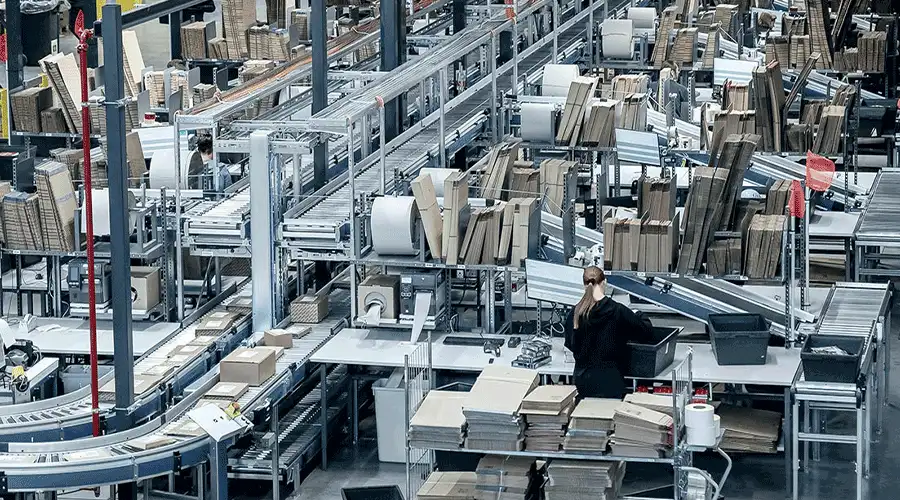
Warehouse leaders in 2026 are not short on automation, data, or ambition, but many are still falling short of the performance they expect. The missing link is workflow coordination, according to the AutoStore 2026 State of the Market (SOM) report. In this blog, dig deeper into the report's findings to learn why it's emerging as the quiet factor separating well-equipped operations from truly high-performing ones.
Warehouses have always been under pressure to move faster, stay accurate, and absorb disruption without losing momentum. What feels different in 2026 is the standard leaders are holding themselves to. Running an operation that can sense change, make decisions, and respond in real time across a more complex environment.
AutoStore’s SOM 2026 report points to five forces shaping that reality: throughput, AI, automation strategy, the talent and technology balance, and sustainability reframed as efficiency.
Read together, those five takeaways share a common thread. Many performance gaps aren’t caused by a lack of ambition or even a lack of tools. They come from a coordination gap. Work gets stuck in the handoffs. Data moves slower than decisions. Decisions move slower than execution. Teams and systems are not always operating from the same picture of what is happening right now.
This is where workflow coordination matters, not as a buzzword but as a practical capability aligning people, software, and automation so work flows smoothly with fewer stalls.
Throughput remains a priority. Ninety-three percent of SOM 2026 respondents say higher or faster throughput over the next 6 to 12 months is mission-critical or a business priority.
And yet, only 21% rate their current throughput as “great.” Most call it “good” (60%), and nearly one in five call it “moderate” (19%).
One reason is that many organizations still define throughput too narrowly. It should encompass a broader view that includes accuracy, order consolidation, and workflow efficiency, not just speed and volume.
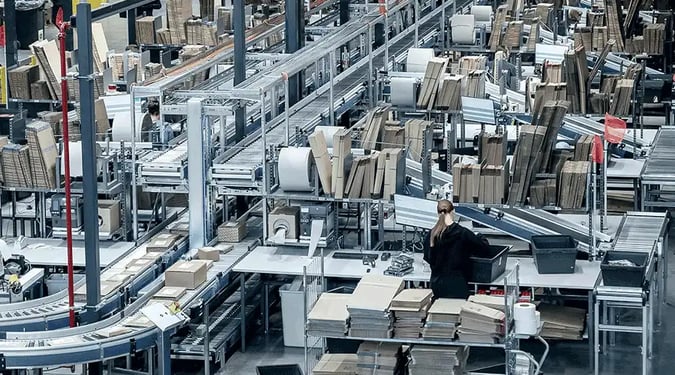 Throughput is a priority for 93% of leaders, yet just 21% say current throughput is great.
That shift changes how you diagnose the problem. You can add speed in one zone and still see little improvement overall if downstream steps cannot keep up, or if upstream data is not reliable enough to support smarter decisions. True throughput gains tend to come from coordination across stages of fulfillment, not isolated “faster picking” initiatives.
System software also plays a key role in making throughput resilient. Strong software orchestration enables dynamic routing, real-time adjustments, and data-driven decision making. In other words, throughput improvements stick when the operation can coordinate work as conditions change.
AI has passed the point of being experimental. Sixty-eight percent of buyers surveyed say it is “very important” to choose an automated storage and retrieval system (AS/RS) provider with an AI-driven platform that combines hardware and software. Seventy-nine percent want real-time data from their automation systems.
At the same time, the uncertainty about implementation remains. “Embracing or implementing AI effectively” ranks as the second biggest warehouse challenge cited this year (36%), behind supply chain delays.
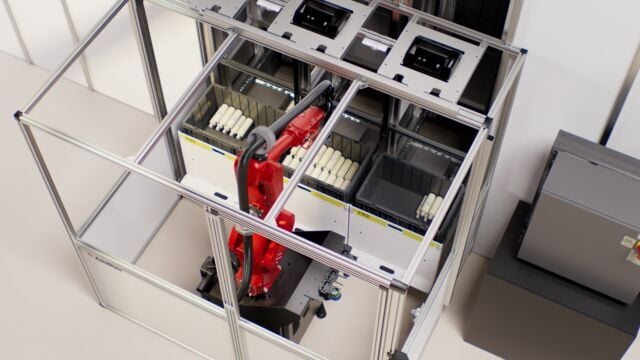 AI solutions like VersaAI™ are becoming a standard part of warehouse operations in 2026.
That tension is a coordination problem as much as it is a technology problem.
AI is positioned in the report as a practical decision layer that connects data, operations, and people. But AI cannot connect what is not already connectable. If data is fragmented, if systems don’t share the same signals, or if teams don’t have clear pathways to act on recommendations, AI becomes another dashboard rather than a driver of daily performance.
The report’s guidance to treat AI as a tool for specific business problems, start small, and build a strong data foundation all point in the same direction. AI payoff arrives faster when workflows are aligned and when the operation can translate insight into action without friction.
Speed alone isn’t enough.
Get the 2026 report on how warehouses are adapting with AI, automation, and real-time decisioning.
Warehouse automation is now widespread. The report notes that the percentage of respondents with zero automation has dwindled to 1%, while 55% operate in a hybrid environment with more than half their processes automated. Meanwhile, 89% plan to invest in new automation within the next 12 to 18 months.
In that context, SOM 2026 shows that automation alone is no longer a competitive advantage. The differentiator is continuous optimization and the strategic integration of advanced technologies.
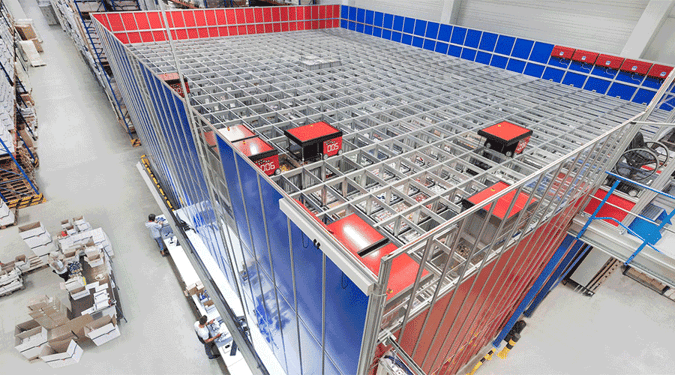 Only 1% of leaders operate without automation; most now run hybrid environments.
This is where workflow coordination stops being abstract and starts becoming critical. Hardware can accelerate tasks but does not automatically align priorities across the operation or guarantee that software, data, and human decisions are synchronized. If those pieces are out of step, automation can make the gaps more visible, and sometimes more costly.
Once again, system software is the layer that orchestrates operations, unlocks data, and enables ongoing improvement of automated assets, enabling coordinated workflows.
Workforce challenges still weigh heavily on warehouse leaders. Workforce challenges like wellbeing, turnover, and skills shortages among top issues (30%). Rising labor costs are also a major pain point (29%).
At the same time, organizations are investing in productivity, inventory visibility, AI, and automation. That combination creates a practical challenge that is easy to underestimate. Technology adoption isn’t just a technical project. It’s a change management initiative.
The barriers cited for AS/RS adoption reinforce this. A “complicated and lengthy implementation process” is a major concern (26%), and “additional time needed to onboard and retrain staff” follows close behind (24%).
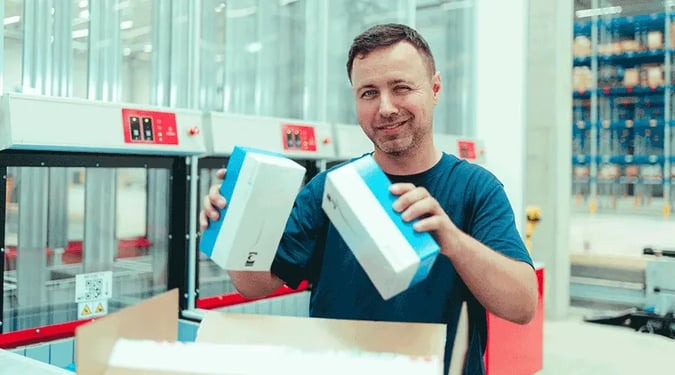 Workforce challenges remain significant in 2026, with 30% of leaders pointing to wellbeing, turnover, and skills shortages.
From a workflow coordination perspective, this is the human side of orchestration. If workflows are unclear, if systems are difficult to learn, or if roles shift without enough support, performance suffers. Conversely, when training is treated as a core investment and systems are intuitive, teams ramp faster, errors fall, and adoption becomes less painful.
The best results come when teams and technology work together, with people supported through change rather than displaced by it. Coordination, in that sense, is about building trust and clarity into how work gets done every day.
On paper, sustainability looks less prominent this year. “Improving sustainability measures” ranks 10th among priorities and is cited by 26% of respondents. Only 12% consider sustainability a primary trigger for seeking a new AS/RS solution.
But the report’s interpretation is clear. Sustainability has not been abandoned. It has been reframed through efficiency, resilience, and tangible business outcomes. Many top priorities are intrinsically linked to sustainability, including increasing efficiency, reducing operational costs, improving order accuracy, and optimizing space.
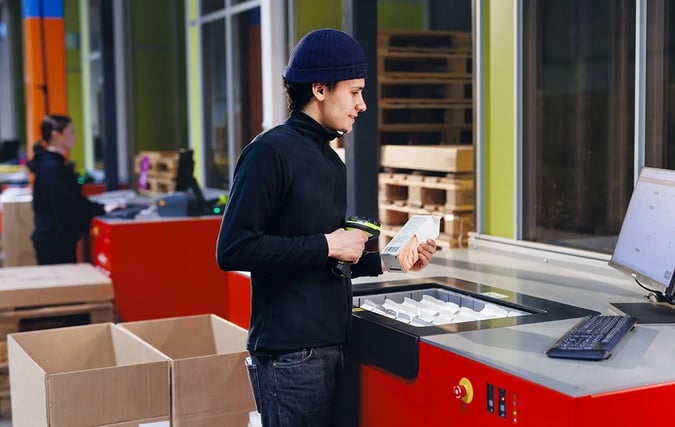 In 2026, sustainability is increasingly pursued through operational efficiency, with 26% of leaders naming it a priority.
This is where coordination matters again. Efficiency gains that depend on heroics do not last. Gains that come from coordinated workflows tend to be repeatable. They show up in fewer errors, better space use, and more predictable operations, all of which support both economic and environmental outcomes the report highlights.
SOM 2026 is clear that the future of fulfillment is intelligent. It requires best-in-class hardware, smart and adaptive software, and a workforce empowered to leverage both.
But that future does not arrive through investment alone. It arrives when those investments are coordinated into a single operating system for fulfillment. Throughput improves when workflows are orchestrated rather than optimized in isolation. AI delivers when insight can be acted on quickly. Automation differentiates when it is integrated with software and continuous improvement. People thrive when adoption is treated as change management. Sustainability becomes credible when efficiency is designed into daily execution.
In 2026, the best warehouses will not simply be more automated. They will be more synchronized.
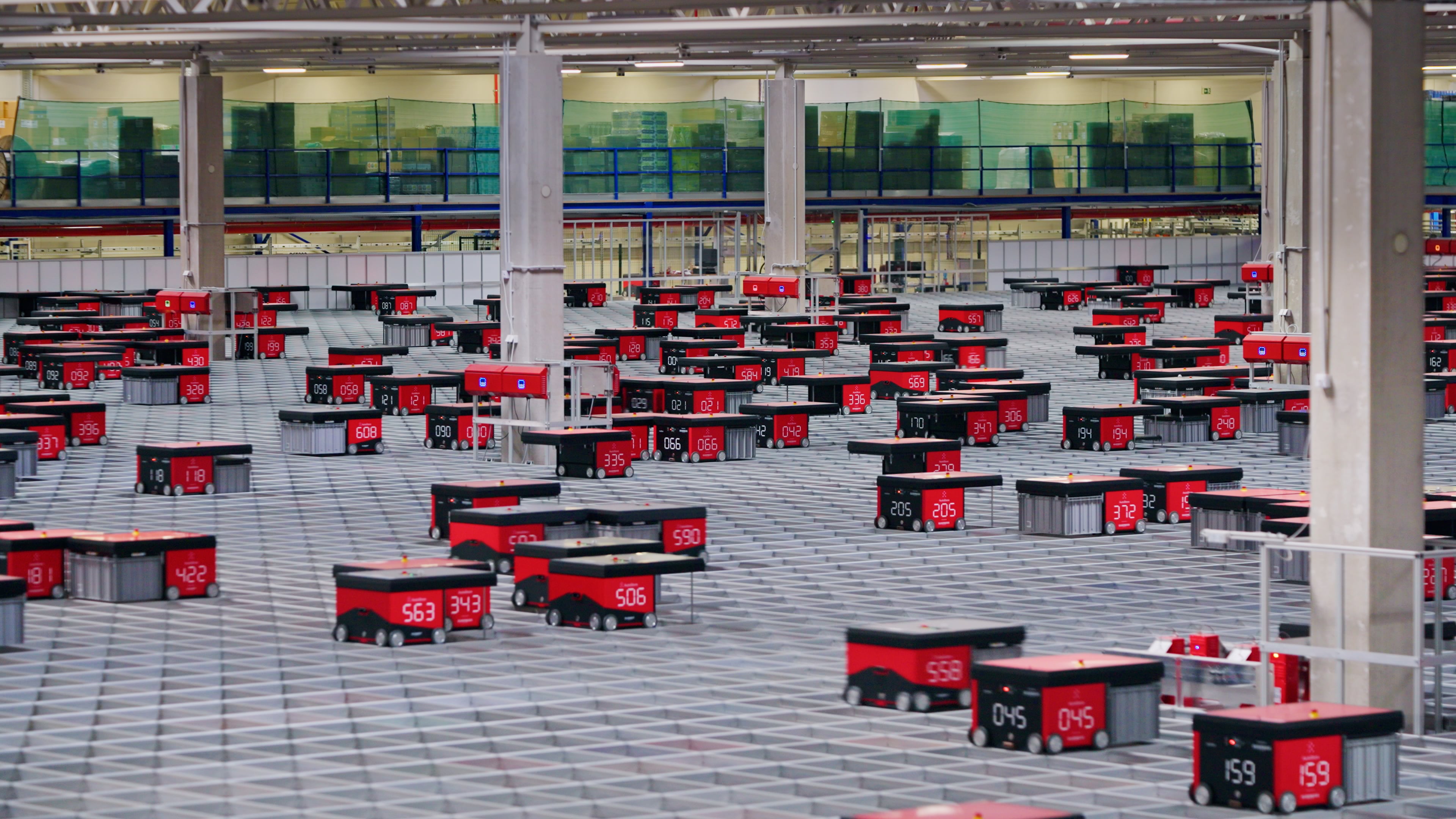
AutoStore’s 2026 State of the Market report confirms what many in the industry already see: Warehouse automation is no longer up for debate. It’s...

As disruption becomes a constant, the ability to sustain throughput under pressure is emerging as a critical competitive advantage. Drawing on...
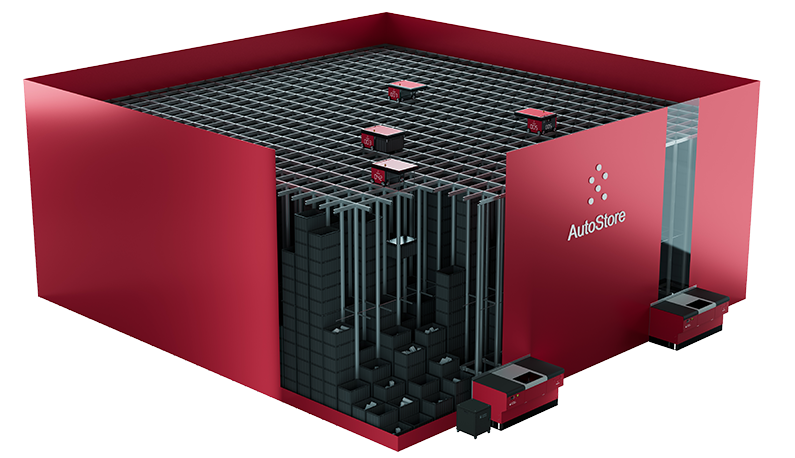
Most companies are still in the early stage of their automation journey. Whether you're an operations or commercial business leader, if you're...

Discover the diverse types of robots in warehousing, including the innovative AutoStore robots. Explore the future of logistics and warehouse...