/2025-02%20AutoStore%20Logo%20Landscape%20(red%20white).png?width=175&height=31&name=2025-02%20AutoStore%20Logo%20Landscape%20(red%20white).png "2025-02 AutoStore Logo Landscape (red white)")
/2025-02%20AutoStore%20Logo%20Landscape%20(red%20black).png?width=175&height=31&name=2025-02%20AutoStore%20Logo%20Landscape%20(red%20black).png "2025-02 AutoStore Logo Landscape (red black)")



Order Cycle Time: What It Is and How to Measure It
What is order cycle time and why is it important? What effect does it have on your warehouse operations? In this article, we’ll explore how to...

Omnichannel order management is a system that allows businesses to manage and fulfill orders across multiple sales channels — be it online, in-store, mobile, or even through third-party marketplaces — seamlessly. Unlike traditional order management systems, which often silo orders based on the channel they were placed, omnichannel order management integrates all channels into one unified system. This ensures that no matter where an order originates, it can be processed, tracked, and fulfilled using the same centralized platform.
The primary difference between omnichannel and traditional order management lies in the following:
In modern retail and e-commerce, the role of omnichannel order management is pivotal. Customers now expect the convenience of options like:
An omnichannel system allows businesses to meet these expectations by providing a cohesive experience, no matter how the customer interacts with the brand. Moreover, it helps retailers optimize their supply chain by efficiently routing orders to the best fulfillment center, store, or warehouse, reducing costs and speeding up delivery times.
Ultimately, omnichannel order management empowers businesses to operate with the flexibility and efficiency needed in today’s competitive environment, all while delivering a consistent and satisfying customer experience across every channel. Next up we will explain the key benefits that omnichannel order management provides.
Both strategies use multiple platforms to engage customers, but the key distinction is integration. Multichannel means each channel (i.e a website, social media, or physical store) operates independently, offering separate experiences. Omnichannel, on the other hand, connects all channels to deliver a seamless, consistent journey. Customers can start on one channel and finish on another without friction. In short: multichannel expands reach, while omnichannel enhances experience through integration.
Investing in an omnichannel order management system can significantly transform your business operations and enhance the customer journey. This system provides a unified platform for managing orders across all sales channels — online, in-store, mobile, and third-party marketplaces — ensuring a consistent and efficient experience for both businesses and customers.
Omnichannel order management ensures a seamless customer experience by integrating all sales channels, allowing customers to interact with your brand smoothly, regardless of the channel. This integration offers real-time inventory visibility, flexible fulfillment options (like BOPIS), and streamlined returns, leading to higher satisfaction and loyalty. Customers benefit from synchronized cart items, order history, and current status updates, which reduce anxiety and build trust.
By consolidating multiple sales channels into a single system, omnichannel order management simplifies order processing, fulfillment, and returns. This centralized approach eliminates inefficiencies, reduces manual errors, and automates workflows from order capture to delivery. Businesses can focus on strategic growth rather than operational challenges, with automated updates ensuring accurate inventory levels and efficient fulfillment.
One of the system’s greatest advantages is enhanced inventory visibility. Accurate, up-to-date inventory data across all channels prevents overselling and stockouts, improves demand forecasting, and minimizes costs. Real-time tracking and automated stock replenishment ensure that inventory levels are optimized and disruptions are avoided.
An omnichannel system expands your reach by offering convenient shopping options such as curbside pickup and ship-from-store. By optimizing fulfillment options and integrating customer touchpoints, businesses can drive higher sales and conversion rates.
Omnichannel order management provides valuable insights into customer behavior, sales trends, and operational performance. Leveraging this data helps businesses make informed decisions, optimize inventory levels, and tailor marketing strategies. Continuous analysis of performance metrics enables ongoing improvements in order accuracy, fulfillment speed, and overall customer satisfaction.
After understanding the key benefits and best practices of omnichannel order management, it's time to focus on how to implement these strategies effectively. By following specific steps, businesses can ensure they maximize the advantages of their omnichannel system. Let’s explore the best practices for successfully implementing an omnichannel order management system.
Implementing an omnichannel order management system is key to optimizing your business operations. These following steps will help streamline your processes, improve customer satisfaction, and keep your business competitive in an evolving marketplace.
After implementing an effective omnichannel order management system, it's essential to understand and manage your various sales channels. Let’s explore why this is key to your overall strategy!
To effectively manage and integrate various sales channels is essential for success. Sales channels — such as online stores, physical retail locations, mobile apps, and third-party marketplaces — serve as diverse touchpoints where customers interact with your brand. Properly understanding and managing these channels can significantly enhance your business operations and customer satisfaction. Here’s how omnichannel systems streamline this process:
Identifying your sales channels: Understanding each channel’s role helps tailor your strategies to meet customer needs and maximize revenue. Each channel offers unique opportunities:
Channel Integration: An omnichannel system integrates these channels into a unified platform, offering several benefits:
Challenges of managing inventory across channels: Managing inventory across multiple channels can lead to:
Benefits of omnichannel inventory management: An omnichannel inventory management system addresses these challenges by:
Role of real-time data: Real-time data is crucial for:
By understanding your sales channels and implementing effective omnichannel inventory management, you can enhance operational efficiency, optimize stock levels, and deliver a consistent customer experience. In the next sections we’ll explain best practices for omnichannel order management.
As businesses continue to evolve, so too does the landscape of omnichannel order management. The future of these systems is being shaped by emerging trends and innovations that promise to enhance efficiency, accuracy, and customer satisfaction. Here’s a look at the key trends and technologies that are set to define the future of omnichannel order management:
1. Increased automation:
2. Integration of artificial intelligence (AI):
3. Evolving customer expectations:
4. Advancements in technology integration:
5. Emphasis on sustainability:
In conclusion, the future of omnichannel order management will be shaped by advancements in automation, AI, and technology integration, alongside evolving customer expectations. Businesses that embrace these trends and innovations will be well-positioned to enhance their operational efficiency, deliver exceptional customer experiences, and stay ahead in a competitive market. This is something AutoStore can help you with. In the next section we will explain the benefits of integrating AutoStore with your omnichannel systems.
A distributed order management system (DOM) is the best software solution for comprehensive omnichannel order management. While a traditional order management system (OMS) handles the basic order lifecycle, it is primarily designed for a linear distribution model or a single sales channel and lacks the advanced capabilities required for a complex omnichannel environment.
Omnichannel Support: A DOM is specifically built to manage orders from multiple sales channels (online, in-store, mobile apps, etc.) and orchestrate fulfillment across a distributed network of warehouses, stores, and suppliers. A traditional OMS struggles to sync inventory and manage orders across these diverse touchpoints.
Intelligent Order Routing: DOM uses advanced, rule-based logic to determine the most efficient and cost-effective fulfillment location for each order in real-time. Factors considered include:
Real-time Inventory Visibility: DOM provides a unified, real-time view of all inventory across the entire supply chain, which is crucial for enabling options like BOPIS or “ship from store” without the risk of overselling or stockouts. Traditional OMS often lack this dynamic, real-time visibility.
Flexibility and Scalability: DOM solutions are designed to be more agile and flexible, capable of integrating with various systems (ERP, WMS, POS) to support complex, growing distribution and fulfillment networks. In essence, a DOM system is an advanced form of OMS functionality that enables the seamless, high-quality customer experiences expected in today's omnichannel retail environment.
As businesses strive to excel in omnichannel order management, AutoStore emerges as a pivotal solution, seamlessly integrating, supporting, and enhancing the multifaceted landscape of modern retail and e-commerce. Here’s how AutoStore, a leader in automated storage and retrieval systems, plays a crucial role in elevating omnichannel order management strategies:
AutoStore’s innovative approach to warehousing and fulfillment integrates effectively with omnichannel order management systems. By automating the storage, retrieval, and handling of goods, AutoStore facilitates real-time inventory updates and synchronization across all sales channels. This integration ensures that inventory levels are accurate and visible across online platforms, physical stores, and other sales channels, thereby reducing the risk of overselling and stockouts.
With AutoStore, businesses can centralize their inventory in a compact, highly efficient system, which is crucial for maintaining accurate stock levels and ensuring that orders can be fulfilled from the most optimal location. This integration not only streamlines inventory management but also enhances the overall efficiency of the order fulfillment process, aligning with the real-time needs of an omnichannel strategy.
AutoStore customers consistently highlight how its automation helps them meet the challenges of omnichannel retail—speed, efficiency, and scalability are recurring themes.
Here are some detailed examples of what customers are saying:
Challenge: Competing in the fast-paced e-commerce space while maintaining store replenishment.
Solution: Implemented eight AutoStore systems with 840,000 Bins and over 1,000 Robots.
Impact: Best Buy now offers free next-day delivery to 50 million customers across the U.S. and Canada, while also streamlining store restocking.
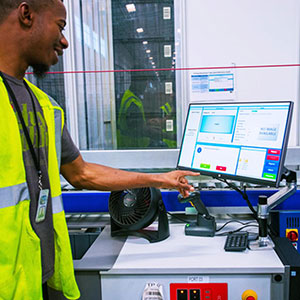
Customer voice: One Best Buy executive noted that before AutoStore, “everybody wanted to know what we were going to do to compete in the e-commerce space… nowadays people don’t ask that anymore.”
Wes Whalberg Former Senior Director of Innovation and Field Operations, Best Buy
Challenge: Handling surging online and offline book orders.
Solution: Rhenus deployed AutoStore to support Thalia’s omnichannel operations.
Impact: Achieved record-high throughput of 13,100 bin presentations per hour, ensuring fast fulfillment across multiple sales channels.
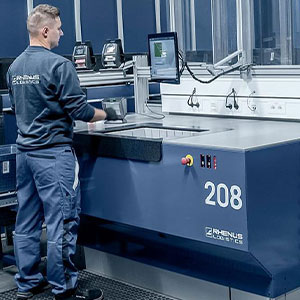
Customer voice: “AutoStore offers us high flexibility and scalability, and regarding storage quality, we made a step forward too.”
Florian Schneider Site Manager, Rhenus Warehousing Solutions Hörselgau
Challenge: Rapid international growth and expanding product range across e-commerce and physical stores.
Solution: Integrated AutoStore with Element Logic to unify inventory for both online and retail sales.
Impact: Multiplied storage capacity and optimized warehouse processes for reliability and efficiency.

Customer voice: “For us, AutoStore was the best decision so far in terms of efficient and resource-optimized warehouse management.”
Andreas Oliver Bindhammer Founder and CEO, eXXpozed
Challenge: Rising demand for products across multiple channels.
Solution: Adopted AutoStore’s goods-to-person robotics.
Impact: Saw a 150% faster pick rate, boosting accuracy and future-proofing operations for omnichannel growth.
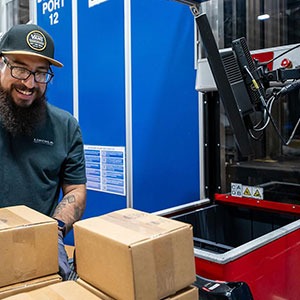
Customer voice: “We needed a couple of things for our customers: density, speed, and reliability, and the AutoStore solution has delivered on all those fronts.”
Curt Nelson Senior Engineering Manager, Polaris
Speed & throughput: AutoStore enables record bin presentations and faster pick rates.
Scalability: Retailers like Best Buy and eXXpozed highlight how AutoStore supports both online and physical stores.
Customer experience: Next-day delivery, reliable order fulfillment, and efficient replenishment are direct benefits.
Future-proofing: Customers see AutoStore as a way to stay competitive in the evolving omnichannel landscape.
Here’s a clear comparison table showing how different industries are leveraging AutoStore to achieve omnichannel success:
| Industry | Example Customer(s) | Key Omnichannel Challenge | AutoStore Solution | Impact / Results |
|---|---|---|---|---|
| Electronics | Best Buy | Competing in e-commerce while replenishing physical stores | 8 AutoStore systems with 840,000 Bins and 1,000+ Robots | Free next-day delivery to 50M customers; streamlined store restocking |
| Fashion & Sports | eXXpozed | Managing rapid growth and unified inventory for online + retail | 2 CarouselPorts, 12 R5 Robots, 10,950 Bins | Multiplied storage capacity; optimized warehouse processes; reliable fulfillment across channels |
| Books & Media | Thalia (via Rhenus Logistics) | Surging demand across online and offline book sales | 530 R5 Robots, 94 CarouselPorts, 240,000 Bins | Record throughput of 13,100 bin presentations/hour; fast fulfillment across multiple sales channels |
| Powersports | Polaris | Rising demand across multiple sales channels | 74 R5 Robots, 9 CarouselPorts, 5 ConveyorPorts, 44,000 Bins | 150% faster pick rate; improved accuracy; scalable operations for future omnichannel growth |
In conclusion, mastering omnichannel order management is crucial for delivering seamless customer experiences across all sales channels. An efficient system helps businesses optimize operations, enhance customer satisfaction, and stay competitive as consumer expectations evolve. Embracing trends like automation, AI, and sustainability, along with integrating solutions like AutoStore, can further elevate omnichannel strategies, ensuring success in the ever-changing retail landscape.
An omnichannel order management system integrates and manages orders across multiple sales channels (online, in-store, mobile) to provide a seamless customer experience.
Omnichannel management is the strategy of creating a unified customer experience by integrating various channels (online, offline, mobile) so customers can interact with a brand consistently across all touchpoints.
The main difference is integration. Multichannel uses multiple platforms, including websites, social media, and physical stores, but each operates independently, creating separate experiences. Omnichannel connects all channels so customers enjoy a seamless, consistent journey, moving between touchpoints without friction. In short: multichannel expands reach, while omnichannel delivers a unified experience.
The four pillars are: 1) Integrated technology, 2) Unified data and insights, 3) Consistent customer experience, and 4) Seamless channel integration.
An omni order refers to an order placed by a customer through one channel but managed and fulfilled through another, ensuring a seamless and consistent experience across channels.
A distributed order management (DOM) system is the best solution for omnichannel order management. Unlike a traditional order m,anagement system (OMS), which works for single-channel or linear models, DOM is designed for complex, multi-channel environments. It offers:
In short, DOM delivers the agility and visibility needed for seamless omnichannel experiences.

What is order cycle time and why is it important? What effect does it have on your warehouse operations? In this article, we’ll explore how to...
-1.jpg)
Warehousing is the backbone of the e-commerce industry. As e-commerce businesses grow, efficient and reliable warehousing solutions become...

In the competitive world of e-commerce, efficient and effective order fulfillment is crucial for maintaining customer satisfaction and ensuring...
With the right layout, your warehouse will drive efficiency, safety, and scalability. Learn how to deliver your project from conceptual design to...